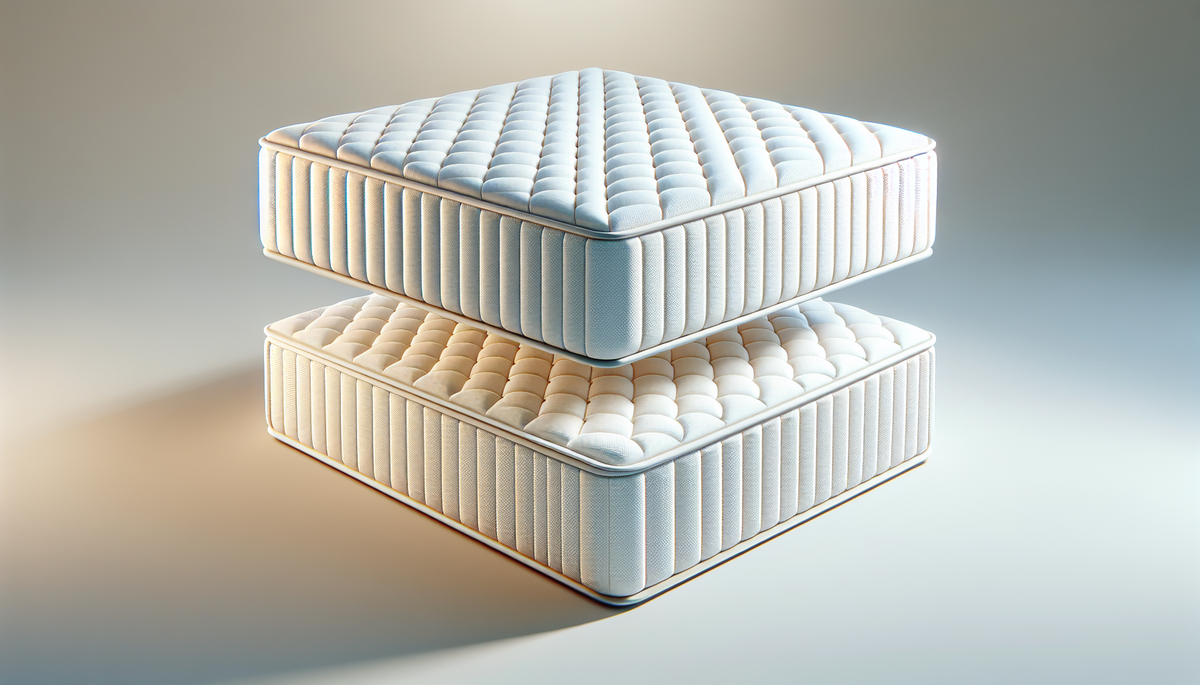
🎨 AI-generated illustration (EU AI Act 2026) — does not represent the actual appearance of the product. See the Amazon listing for official photos.
🔗 Affiliate links: Some links are Amazon affiliate links. As an Amazon Partner, we earn a commission on eligible purchases, at no extra cost to you.
Get our best picks
Every week, our Amazon comparisons directly in your inbox.
No spam. Unsubscribe in 1 click.
Introduction
Between a memory foam mattress and a latex mattress, it’s easy to hesitate… and I understand why. Both promise comfort, but they don’t “work” in the same way at all. The first moulds to your body, while the second bounces back and feels more responsive. In this article, I’m sharing my honest opinion, without the waffle: what I liked, what I’d keep an eye on, and how to choose according to the way you sleep.
My aim is simple: to help you identify the right mattress for your habits, your body and even your sleep temperature (yes, that matters more than we think).
Criteria for choosing
- Your sleeping position: on your back, on your side, on your front… it changes everything. Memory foam tends to “cradle” pressure points better, whereas latex helps maintain a more stable feel and makes movement easier.
- The sensation you’re after: do you want a “cocoon” effect that wraps around you? Then memory foam is probably the better option. Do you prefer a more “felt” and responsive comfort? Latex may suit you better.
- Heat: some memory foam mattresses retain more heat than others. Latex, on the other hand, often offers better airflow and a more breathable feel. If you tend to get hot at night, this is a key point.
- Changing position: if you turn over often, latex may feel more comfortable thanks to its bounce. Memory foam can give the impression of sinking in more, which is great for pressure relief, but sometimes less practical if you need to move quickly.
- Body support: we’re talking about support, not just softness. Both can be excellent, but you need to look at density/structure and firmness level rather than relying solely on the material name.
- Noise and movement: latex often behaves more “springily”, whereas memory foam isolates movement more effectively. If you sleep as a couple, the impact on disturbances can matter.
- Your feel at the surface: some people love the slow, enveloping sensation of memory foam. Others find it too “sticky” or too slow to respond. Latex is generally more immediate.
Advantages
Memory foam mattress: the advantage of “cradling”
The big strength is pressure distribution. If you have sensitive areas (shoulders, hips, lower back), memory foam can really help. You get the feeling of being “supported” without hard pressure points coming back to bother you. On top of that, many models are designed to improve airflow, even if the actual feel still depends heavily on the cover and the overall construction.
Another advantage is motion isolation. If you share your bed, you may feel less of the movement from the other side. And that’s very welcome when you don’t have exactly the same sleep habits.
Latex mattress: dynamic comfort
Latex often feels more “alive”. It adapts to the body, yes, but it doesn’t compress as much. The result: you keep good stability, which helps you change position without struggling. For many people, it’s easier to find a comfortable position, especially if you move around during the night.
Latex is also known for being more breathable. In plain terms: you often don’t get the same “sleeping hot” feeling as with some memory foam mattresses. And if you tend to overheat quickly, this is definitely a criterion worth paying attention to.
The match according to your profile
If you want an enveloping comfort, are looking to relieve pressure and like it when the mattress follows your movements, memory foam can be an excellent choice. If you prefer comfortable support that is more responsive, and you want to limit the feeling of heat, latex often has the edge.
FAQ
Q? Which is more comfortable for side sleeping?
Generally, memory foam is very popular for side sleeping because it helps cushion the shoulders and hips. But a well-designed latex mattress can also be excellent: if the firmness is right, you can achieve a good balance between relief and stability.
Q? Does memory foam get too hot?
It depends on the model. Some memory foam mattresses retain more heat, especially if the design is less breathable. If you sleep hot, I’d recommend looking at the cover, ventilation and the overall feel (and ideally reading real-world reviews).
Q? Is latex easier to move on than memory foam?
Yes, often. Latex tends to be more responsive: you generally feel more “on top of” it rather than sunk into it. As a result, changing position can be easier, which is handy if you tend to turn over often.
Conclusion
My view, in simple terms: memory foam for enveloping comfort and pressure relief, latex for a more dynamic feel, better stability and often a cooler night. But the real winner is the one that suits your sleep: your position, your sensitivity to heat, and the way you move during the night.
If you’re still unsure, I’d suggest asking yourself three questions: where do you feel the most pressure? do you sleep hot or cold? do you change position often? With those answers, you can already steer your choice much more confidently.