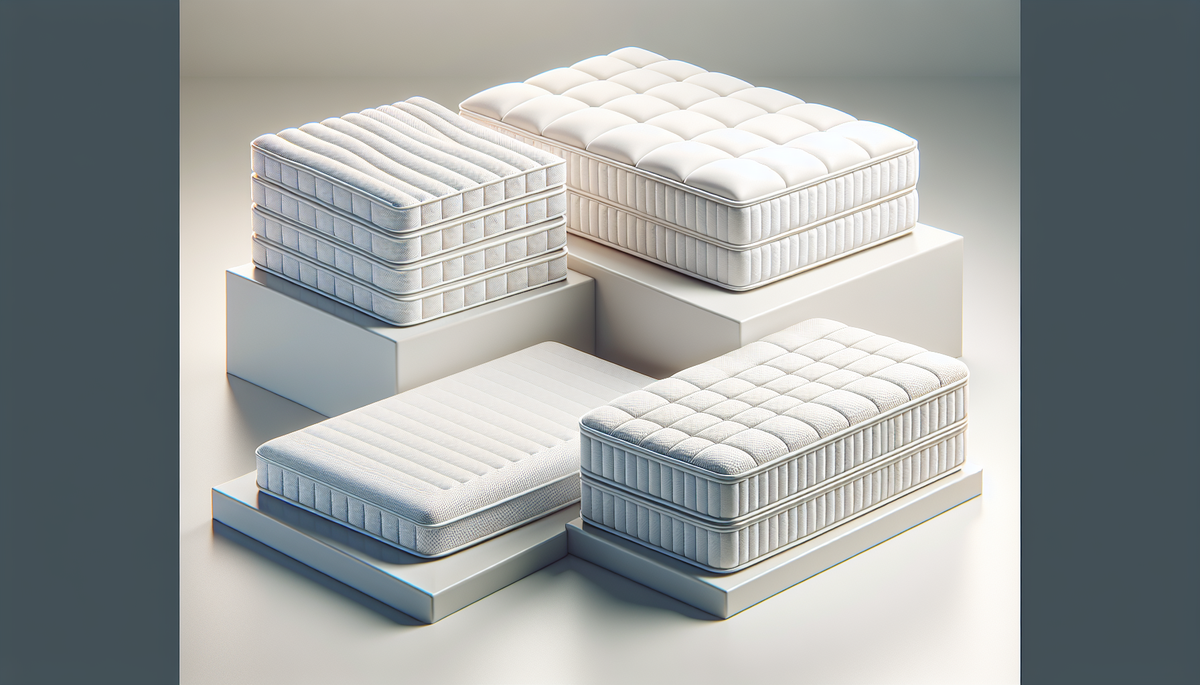
🎨 AI-generated illustration (EU AI Act 2026) — does not represent the actual appearance of the product. See the Amazon listing for official photos.
🔗 Affiliate links : Some links on this page are Amazon affiliate links. As an Amazon Associate, we earn from qualifying purchases.
Get our best picks
Every week, our Amazon comparisons directly in your inbox.
No spam. Unsubscribe in 1 click.
Introduction: my honest take on memory foam vs latex
If you’re shopping for a new mattress, the choice often comes down to two popular comfort materials: memory foam and latex. Both can feel luxurious, both can relieve pressure, and both can be excellent—yet they behave very differently once you lie down and move around at night. In this guide, I’ll compare them in a practical, buyer-focused way, explain what to look for, and recommend how to choose based on your sleep style, budget, and preferences.
Quick summary: Memory foam is great for deep contouring and motion isolation, while latex tends to feel more buoyant, breathable, and responsive. If you want a “hug,” choose memory foam. If you want “support with bounce,” choose latex.
How memory foam mattresses feel (and why people love them)
Memory foam is designed to conform to your body shape. When you lie down, it warms up and gradually molds around pressure points like shoulders, hips, and lower back. This is why many sleepers experience a noticeable reduction in pressure.
Top features to look for in memory foam
- Pressure relief layers: Look for a comfort layer that’s thick enough to do the work (commonly 2–4 inches depending on the overall build).
- Support core: A stable base layer helps prevent “bottoming out.”
- Foam density: Higher density usually means better durability and support. Very low-density foam can soften faster.
- Cooling tech: Gel-infused foam, phase-change materials, or open-cell designs can help reduce heat retention.
- Motion isolation: Memory foam typically absorbs movement, which is ideal for couples.
How latex mattresses feel (and why they’re different)
Latex is naturally elastic, so it compresses and then springs back. Instead of sinking deeply, many latex mattresses provide a more “floating” feel. That bounce can make it easier to change positions and can help sleepers who dislike the slow, stuck feeling some memory foams create.
Top features to look for in latex
- Type of latex: Look for natural latex, blended latex, or synthetic latex. Natural latex is often more breathable and durable.
- Talalay vs Dunlop: Talalay is often more uniform and airy; Dunlop is denser and more traditional. Both can be excellent.
- Support zoning: Some latex mattresses use different firmness zones for shoulders/hips.
- Breathability: Latex generally sleeps cooler than many traditional memory foams due to airflow and less heat trapping.
- Responsiveness: Great for combination sleepers and people who move often.
Memory foam vs latex: side-by-side comparison
Here’s the practical comparison that matters when you’re actually sleeping—not just reading marketing claims.
1) Comfort and pressure relief
- Memory foam: Excellent pressure relief because it conforms closely to the body.
- Latex: Strong pressure relief too, but the feel is more supportive and springy rather than deeply molded.
2) Heat retention and cooling
- Memory foam: Can sleep warmer, especially with thicker, denser layers. Cooling features help but don’t always eliminate heat.
- Latex: Usually sleeps cooler due to better airflow and responsiveness.
3) Motion isolation (couples)
- Memory foam: Typically very good at isolating motion. If your partner moves, you’re less likely to feel it.
- Latex: Often good, but the bounce can transmit more movement than memory foam.
4) Ease of movement
- Memory foam: Some models can feel “slow” to respond. If you change positions frequently, you may feel stuck.
- Latex: Generally easier to move on thanks to its spring-back.
5) Durability
- Memory foam: Durability depends heavily on foam density and build quality. Higher-quality foams last longer.
- Latex: Often very durable and maintains comfort longer, especially natural latex.
6) Odor and off-gassing
- Memory foam: Some mattresses may have a stronger initial odor due to the foams used.
- Latex: Can also have an odor, but many people find it mild and it dissipates quickly.
Product comparison section: what to choose (and why)
Below are example product types and what to look for. Because models change and availability varies by region, I’m focusing on buying criteria and typical product categories rather than claiming a single “best” mattress for everyone.
Memory foam mattress—best for
- Side sleepers who need deep pressure relief at shoulders and hips.
- Couples who prioritize motion isolation.
- People who like a slow, hugging feel and don’t mind a slightly warmer sleep.
Latex mattress—best for
- Hot sleepers or people who wake up sweaty.
- Combination sleepers who change positions often.
- People who want support with bounce and easy movement.
My “honest opinion” recommendation logic
- If you frequently wake up due to pressure, start with memory foam (or a latex model with a softer top layer).
- If you wake up due to heat or feel “trapped,” choose latex.
- If you and your partner are both sensitive to movement, memory foam is usually the safer bet.
- If you want a mattress that feels responsive and supports your body without deep sinking, latex wins.
Buying criteria: how to choose the right mattress (regardless of material)
Material is only one part of the equation. Use these criteria to make a smart purchase.
1) Firmness level and your sleep position
- Side sleepers: Usually prefer medium to medium-soft for pressure relief.
- Back sleepers: Often do best with medium firmness for spinal alignment.
- Stomach sleepers: Typically need medium-firm to firm to prevent hips from sinking too far.
2) Body weight and comfort thickness
- Lighter sleepers: May need less thickness to feel comfortable.
- Heavier sleepers: Need stronger support cores and durable materials to avoid premature sagging.
3) Mattress height (profile)
- Thicker mattresses often provide more layers and customization, but they can also cost more.
- If you’re sensitive to sinking, consider latex or a memory foam model with a responsive transition layer.
4) Edge support
If you sit on the edge of the bed or share with a restless partner, edge support matters. Look for reinforced perimeter construction.
5) Cover and airflow
- Breathable covers, moisture-wicking fabrics, and ventilated foams can improve comfort.
- For hot sleepers, prioritize airflow and cooling features.
6) Certifications and quality signals
- Look for credible certifications (e.g., OEKO-TEX for textiles, CertiPUR-US for foam in some markets).
- Check materials transparency: reputable brands list foam types and latex composition.
7) Trial period, warranty, and return policy
This is crucial. Your body will tell you what your research can’t. Choose brands with:
- At least 90 nights (longer is better if available)
- Clear return shipping terms
- Warranty that covers sagging with defined thresholds
Top features to look for (quick checklist)
- Support core quality (durability and alignment)
- Comfort layer thickness (pressure relief)
- Breathability (especially if you sleep hot)
- Responsiveness (easy movement)
- Motion isolation (couples)
- Edge support (stability when sitting)
- Certifications (safer materials)
- Trial/warranty (risk reduction)
Recommended mattress “types” by sleeper profile
Instead of one-size-fits-all picks, here are practical recommendations that match common needs.
1) If you’re a side sleeper with shoulder/hip pain
- Memory foam: Choose medium-soft with a supportive base and a comfort layer thick enough to relieve pressure.
- Latex: Choose a softer top layer (often medium) with good zoning or a plush cover.
2) If you sleep hot
- Latex: Usually the better starting point.
- Memory foam: If you prefer it, look for open-cell foam, breathable covers, and cooling features—but still expect more heat than latex.
3) If you share the bed
- Memory foam: Often best for motion isolation.
- Latex: Consider models with comfort layers that reduce bounce if you’re very motion sensitive.
4) If you switch positions often
- Latex: Typically easier to move on.
- Memory foam: Look for a responsive transition layer so you don’t feel “stuck.”
Conclusion: which one should you buy?
My honest opinion is that memory foam and latex both deserve a place—the “best” choice depends on how you sleep. Choose memory foam if you want deep contouring, excellent pressure relief, and strong motion isolation. Choose latex if you want a cooler, more breathable mattress with bounce and easier movement.
Final advice: Don’t shop only by material—shop by firmness, support quality, breathability, and trial policy. If you can, test in a showroom or rely on a long trial period. Your comfort is personal, and the right mattress should make you feel supported and relaxed within the first few nights.
🔗 Affiliate links : Some links on this page are Amazon affiliate links. As an Amazon Associate, we earn from qualifying purchases at no extra cost to you.
🏆 Top 5 — Best mattresses comparison
↻ Mis à jour le 14/04/2026 · Données 2025-2026