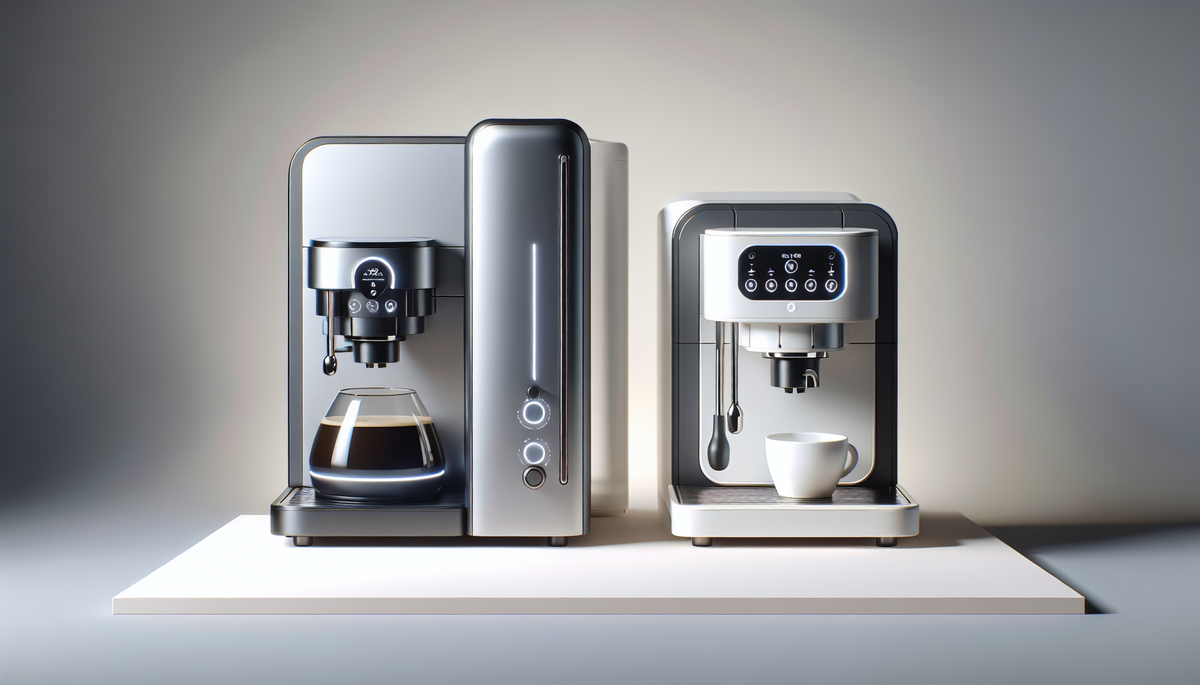
🎨 AI-generated illustration (EU AI Act 2026) — does not represent the actual appearance of the product. See the Amazon listing for official photos.
🔗 Affiliate links : Some links are Amazon affiliate links.
Get our best picks
Every week, our Amazon comparisons directly in your inbox.
No spam. Unsubscribe in 1 click.
Automatic vs manual coffee machine: which should you choose in 2026?
Choosing between an automatic and a manual coffee machine is one of the biggest decisions for your daily cup. In 2026, both categories have improved: automatic machines are smarter and more customizable, while manual (semi-automatic and fully manual) setups have become easier to learn thanks to better grinders, guided apps, and more consistent accessories. This guide breaks down the differences, highlights the key features to look for, and recommends what to buy based on your lifestyle, budget, and taste preferences.
Whether you want espresso, milk drinks, or simple black coffee, the “right” choice depends less on hype and more on how much time you want to spend, how consistent you need your results to be, and how much you care about controlling every variable.
Quick definitions: what “automatic” and “manual” usually mean
Automatic coffee machines
Automatic machines typically grind beans, brew, and often steam milk with minimal user intervention. Many are “bean-to-cup” systems where you load whole beans and add water. You choose a drink preset, and the machine handles the rest.
Common types include:
- Bean-to-cup super-automatics (grind + brew + often milk)
- Pod/capsule automatics (fast, consistent, but less flexible)
- Fully automatic espresso machines with touch controls and cleaning cycles
Manual coffee machines
“Manual” usually refers to semi-automatic espresso machines, lever machines, or filter/brewing devices where you control most steps. You may still use automation for temperature stability, but you generally handle grinding, dosing, tamping, brewing, or milk steaming.
Common types include:
- Semi-automatic espresso machines (you control dose and extraction time)
- Manual espresso machines (lever/pump control)
- Pour-over and immersion brewers (you control water temp and flow)
- Moka pots (simple manual stovetop brewing)
Automatic vs manual: the real trade-offs
1) Taste consistency vs control
- Automatic: Delivers consistent results with presets. Great if you want reliable drinks every morning.
- Manual: Gives you control over grind size, dose, tamp pressure, extraction time, and milk texture—ideal if you want to fine-tune flavor.
2) Time and convenience
- Automatic: Usually 1–2 minutes from pressing a button to a finished drink. Often includes automatic rinsing and cleaning cycles.
- Manual: Typically 5–15+ minutes depending on your workflow and skill level (especially for espresso and milk).
3) Learning curve
- Automatic: Minimal learning. You can adjust strength, temperature, or milk settings, but the machine handles most variables.
- Manual: Steeper learning curve. You’ll likely need a quality grinder and you’ll experiment to dial in extraction and milk.
4) Ongoing costs
- Automatic: Often higher upfront cost. Ongoing costs include maintenance, descaling, and cleaning tablets. If you use beans, you’ll still need fresh coffee.
- Manual: Can be cheaper on consumables, but you may spend more on a grinder and accessories. Replacement parts and cleaning are still important.
5) Maintenance effort
- Automatic: Look for guided cleaning cycles and easy access to brew groups. Milk systems require regular cleaning.
- Manual: Generally less complex internals, but you still need to clean group heads, portafilters, steam wands, and brewing tools.
Top features to look for in 2026
For automatic machines
- Bean-to-cup quality: A burr grinder with multiple grind settings and good grind consistency.
- Milk system performance: Look for automatic milk frothing with easy-clean parts or a cappuccino/latte system designed to minimize clogs.
- Custom drink profiles: Ability to adjust strength, temperature, and volume beyond fixed presets.
- Thermoblock or boiler stability: Stable temperature improves espresso and reduces variability.
- Quick heat-up and low wait time: Especially important for households with multiple drinks back-to-back.
- Cleaning and descaling automation: Automatic rinse cycles and clear maintenance indicators.
- Water and bean capacity: Larger tanks and hoppers reduce refill frequency.
For manual machines
- Temperature stability: Thermostability matters for espresso consistency (PID control is a plus).
- Pressure and flow control: For espresso, stable extraction pressure and repeatable flow help you dial in.
- Steam power: If you make milk drinks, steam performance affects texture quality.
- Portafilter size and accessories: Common sizes are 58mm; compatibility can reduce upgrade costs.
- Quality grinder (non-negotiable): Manual espresso quality depends heavily on the grinder—consider budgeting for one.
- Ease of cleaning: Removable drip trays, accessible group heads, and user-friendly backflushing routines.
Buying criteria: choose based on your coffee routine
Choose an automatic machine if…
- You want fast, repeatable drinks with minimal effort.
- Your household drinks different styles (espresso, cappuccino, latte) and you want one-touch convenience.
- You prefer set-and-adjust rather than dialing in recipes from scratch.
- You value automated cleaning and guided maintenance.
Choose a manual machine if…
- You enjoy crafting coffee and learning how variables affect flavor.
- You want to use different beans, roast levels, and brew recipes with more flexibility.
- You’re willing to invest in a high-quality grinder and practice milk steaming.
- You want maximum control over extraction and texture.
Budget guidance (2026 reality check)
In 2026, the “best value” depends on what you already own. A common scenario:
- Automatic: Higher upfront, often includes grinding and milk handling.
- Manual: You may spend less on the machine but need to budget for a grinder and accessories.
If you already have a good grinder and you’re mainly brewing espresso or pour-over, manual can deliver better long-term results. If you don’t want to manage equipment, automatic is usually the smoother path.
Product recommendations (2026 picks) and what to check
Below are categories and example models to consider. Availability and exact specs can vary by region, so always verify features like grinder type, milk system cleaning, and supported drink customization.
Automatic recommendations
- High-end bean-to-cup super-automatic (best for milk drinks): Look for models with automatic milk cleaning, a reliable grinder, and customizable drink profiles. These are ideal for frequent cappuccinos and lattes.
- Mid-range automatic espresso with strong app support: Choose machines that let you save recipes (strength, temperature, volume) and have easy-to-access brew groups for cleaning.
- Pod-based automatics for ultra-fast convenience: If you want speed and minimal maintenance, pods can be consistent. However, you’ll trade away bean flexibility and often pay more per cup.
Manual recommendations
- Semi-automatic espresso machine with PID (best for consistency): Prioritize stable temperature control and good steam power. This helps you produce repeatable espresso and better microfoam.
- Manual espresso starter kit (machine + quality grinder): If you’re new, choose a machine that’s easy to maintain and pair it with a grinder known for consistent particle size.
- Pour-over setup (best for clarity and simplicity): If you prefer black coffee, a well-designed pour-over brewer plus a dependable kettle can outperform many automatics in flavor clarity.
Buying checklist for any recommendation:
- Confirm the grinder type (for automatics) and whether it’s burr-based.
- Check milk system cleaning (automatic rinse, removable parts, or dishwasher-safe components).
- Look for temperature control and stable heating.
- Verify water tank and hopper capacity for your household size.
- Read reviews for maintenance reliability (descaling frequency, clogging issues, and service availability).
Product comparison: automatic vs manual (side-by-side)
| Category | Automatic (Bean-to-cup / Pod) | Manual (Semi-auto / Pour-over / Lever) |
|---|---|---|
| Time to first drink | Fast (often ~1–2 minutes) | Longer (often 5–15+ minutes) |
| Consistency | High with presets; repeatable volumes | High once dialed in; depends on skill and workflow |
| Flavor flexibility | Moderate (adjustments exist but are limited) | High (control over grind, dose, extraction, and brew ratio) |
| Milk quality | Good to very good; depends on milk system | Excellent potential; requires steaming practice |
| Learning curve | Low | Medium to high |
| Maintenance | Automated cleaning helps, but milk systems need care | Straightforward but more hands-on cleaning |
| Ongoing cost | Descaling/cleaning supplies; beans or pods | Beans + grinder wear; accessories; less complex internals |
| Best for | Busy households, frequent milk drinks, convenience seekers | Enthusiasts, recipe tinkerers, black coffee lovers |
Which one should you choose in 2026? (Decision guide)
If you want the easiest daily routine
Pick an automatic bean-to-cup machine if you make coffee every day and want minimal effort. Prioritize a strong grinder, reliable milk performance, and automated cleaning features.
If you care about espresso craft and customization
Pick a manual espresso setup if you enjoy dialing in. Budget for a quality grinder and consider a machine with temperature stability (PID) and strong steam for milk drinks.
If you mostly drink black coffee
Consider manual pour-over or immersion brewers. You’ll get excellent flavor clarity and typically lower maintenance complexity than milk-heavy automatic systems.
Conclusion
In 2026, the choice between automatic vs manual coffee machines comes down to how you want to spend your time and how much control you want over flavor. Automatic machines deliver convenience, consistency, and one-touch milk drinks—especially when you choose models with strong grinders, effective milk cleaning, and customizable drink settings. Manual machines offer deeper control and potentially superior results, but they require practice, a good grinder, and more hands-on involvement.
If you want a simple rule: choose automatic for effortless repeatability and choose manual when you want to learn, experiment, and optimize every cup. Whichever route you take, focus on the features that match your routine—grinder quality, temperature stability, milk system reliability, and maintenance ease—so your coffee experience improves for years, not just weeks.
🔗 Affiliate links : Some links on this page are Amazon affiliate links. As an Amazon Associate, we earn from qualifying purchases at no extra cost to you.
🏆 Top 5 — Best coffee machine
↻ Mis à jour le 13/04/2026 · Données 2025-2026