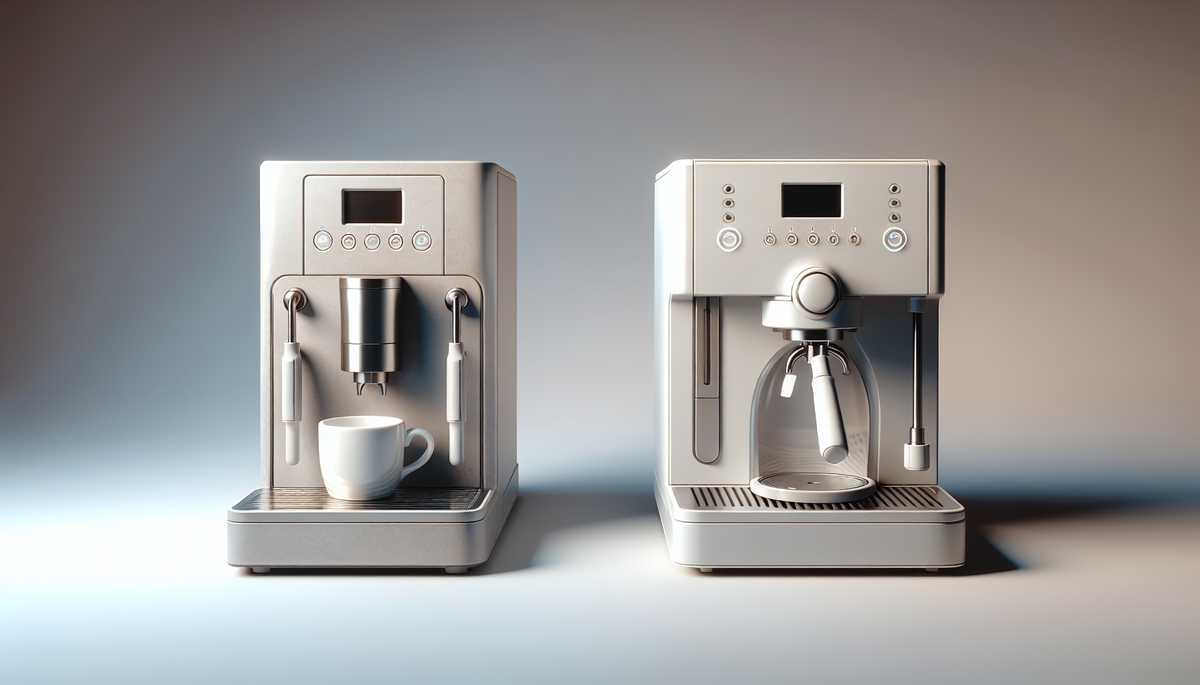
🎨 AI-generated illustration (EU AI Act 2026) — does not represent the actual appearance of the product. See the Amazon listing for official photos.
🔗 Affiliate links : Some links are Amazon affiliate links.
Get our best picks
Every week, our Amazon comparisons directly in your inbox.
No spam. Unsubscribe in 1 click.
Automatic vs manual coffee machine: which should you choose in 2026?
Choosing between an automatic and a manual coffee machine in 2026 is less about “better” and more about your lifestyle, budget, and how much control you want over flavor. Automatic machines prioritize convenience—press a button, get consistent espresso or coffee. Manual machines (including semi-automatic espresso machines, lever machines, pour-over systems, and manual grinders) prioritize craft, customization, and often a more hands-on experience.
This guide breaks down the key differences, what to look for in each category, and practical buying criteria—so you can confidently choose the right machine for your home in 2026.
Quick overview: what “automatic” and “manual” really mean
Automatic coffee machines
- Fully automatic espresso machines (bean-to-cup): grind, dose, tamp (internally), brew, and often dispense milk drinks.
- Super-automatic models: similar to fully automatic but typically with more drink options and automation features.
- Automatic capsule machines: brew with minimal effort; consistency is high, but you’re locked into pods.
Manual coffee machines
- Manual or semi-automatic espresso machines: you control extraction parameters more directly (e.g., grind, dose, tamp, and sometimes flow).
- Pour-over systems: you control water temperature, pour rate, and brew time.
- Lever and traditional brewers: more tactile control and often a slower, more “ritual” style process.
How your daily routine should decide
The best machine is the one you’ll actually use. Consider how many drinks you make per day and how much time you want to spend.
Choose an automatic machine if you want:
- Speed and consistency (especially on busy mornings)
- Low daily effort (automatic cleaning cycles, rinse prompts)
- Milk drinks (lattes, cappuccinos) with minimal barista work
- Different drink preferences for multiple household members
Choose a manual machine if you want:
- Maximum flavor control (grind size, dose, extraction time, brew ratio)
- A hands-on hobby and a consistent ritual
- Better long-term cost control if you buy whole beans and use reusable filters
- To learn and improve over time (dialing in becomes part of the fun)
Top features to look for in 2026
Regardless of category, the “right” features depend on what you brew most often. Below are the most important buying criteria for each type.
Buying criteria for automatic coffee machines
- Bean-to-cup quality: look for reliable grinders (ceramic or steel), consistent dosing, and stable brewing temperature.
- Milk system: automatic steam wands or automatic cappuccino systems should produce microfoam, not just hot milk.
- Customization: ideally allow adjusting strength, cup size, temperature, and milk volume.
- Maintenance design: check for easy access to brew units, descaling alerts, and whether parts are dishwasher-safe.
- Water tank and bean hopper capacity: larger capacities reduce refilling and improve convenience.
- Noise level: grinders can be loud; some models are better insulated.
- Connectivity (optional): app control and recipe saving can be useful but isn’t required.
- Warranty and parts availability: automatic machines depend on internal components—choose brands with good service support.
Buying criteria for manual coffee machines
- Temperature stability: for espresso, stable thermoblock or heat-exchanger systems matter.
- Pressure and control: for semi-automatic espresso machines, look for consistent pressure and user-friendly controls.
- Group head and workflow: ease of tamping, portafilter fit, and steam performance for milk.
- Grinder compatibility: many manual setups depend on a dedicated grinder; built-in grinders are less common.
- Build quality: metal components, solid portafilter design, and durable seals improve longevity.
- Skill curve: if you want quick results, choose a manual system with forgiving workflow and clear guidance.
- Accessories availability: tamper, scale, dosing tools, and replacement parts should be easy to find.
Product recommendations (2026-friendly picks)
Below are practical recommendations by category. Availability and exact model names can vary by region, but these buying targets reflect what to look for in 2026.
Best automatic (bean-to-cup) targets
- De’Longhi Magnifica series: great for beginners who want consistent espresso and simple milk drinks. Look for models with adjustable settings and easy cleaning access.
- Jura E-series / Z-series: strong choice for those prioritizing convenience, good milk output, and reliable automation. Choose models with robust maintenance features and a modern milk system.
- Siemens / Bosch fully automatic lines: often offer a balance of build quality and convenience. Confirm grinder quality and service availability in your country.
Best capsule automatic targets
- Nespresso OriginalLine or Vertuo lines: ideal if you want minimal mess and fast cleanup. Choose based on your preferred drink sizes and whether you value variety in capsule formats.
- Other premium capsule systems: consider if you want stronger espresso-style extraction and better milk options; check ongoing costs of pods.
Best manual/semi-automatic espresso targets
- Breville/Sage Bambino series: popular entry-level semi-automatic espresso machines with quick heat-up and approachable controls. Pair with a capable grinder for best results.
- Gaggia Classic Pro (or similar): good value for learning espresso workflow. You’ll likely want to upgrade or tune parts and use a quality grinder.
- Richer mid-range options from brands like Rancilio, Lelit, or Profitec: excellent if you want longevity and stronger temperature control—especially for milk drinks.
Best manual coffee (pour-over and brew) targets
- Hario V60: a classic pour-over for clarity and control. Pair with a gooseneck kettle and a scale.
- Kalita Wave: slightly more forgiving than some pour-over styles; good for consistent results.
- Stagg-style or similar precision kettles: not a machine, but a key upgrade for manual brewing accuracy.
Automatic vs manual: side-by-side comparison
| Category | Automatic machines | Manual machines |
|---|---|---|
| Ease of use | Very high—push-button workflow | Medium to high—requires technique |
| Consistency | High—recipes repeat reliably | Varies—depends on your dialing-in and skill |
| Flavor control | Limited to machine settings | Extensive—grind, dose, ratio, and extraction control |
| Milk drinks | Often excellent automation (model-dependent) | Can be excellent, but requires steaming practice |
| Time per drink | Fast—typically under a minute | Slower—especially for espresso dialing and pour-over |
| Maintenance | Automated cycles, but internal cleaning is important | Simple cleaning, but more frequent tool care (filters, portafilter, etc.) |
| Ongoing cost | Higher if using beans + frequent services; capsule costs can be high | Often lower with whole beans; grinder quality affects total cost |
| Learning curve | Low | Higher—turns into a hobby |
Which should you choose? Decision guide
Pick an automatic machine if…
- You want espresso and milk drinks without learning barista technique.
- Your household has different drink preferences and you want one-touch options.
- You value speed and repeatability over experimentation.
- You’re willing to pay for convenience and internal maintenance.
Pick a manual machine if…
- You want maximum control over taste and enjoy dialing in.
- You’re comfortable investing time in workflow and cleanup.
- You prefer whole beans, reusable filters, and flexible brewing recipes.
- You want a craft experience rather than a “press button” routine.
Common mistakes to avoid
- Buying an automatic machine without checking milk performance: many models look good on paper but vary in foam quality.
- Ignoring grinder quality for manual espresso: an average grinder can ruin espresso even with a good machine.
- Underestimating maintenance: automatic machines still need descaling and brew unit cleaning; manual setups still require daily tool rinsing.
- Choosing based on aesthetics alone: focus on temperature stability, workflow, and parts access.
Conclusion
In 2026, the choice between automatic and manual coffee machines comes down to your priorities. Automatic machines are ideal if you want consistent results, fast milk drinks, and minimal effort—especially for households with varied preferences. Manual machines are the better fit if you enjoy the craft of dialing in flavors, want deeper control, and are willing to invest time and technique.
Use the buying criteria above—especially maintenance design, temperature stability, milk performance, and grinder compatibility—to narrow your options. Once you match the machine to your routine, you’ll enjoy better coffee every day, whether it’s one-touch convenience or a hands-on brewing ritual.
🔗 Affiliate links : Some links on this page are Amazon affiliate links. As an Amazon Associate, we earn from qualifying purchases at no extra cost to you.
🏆 Top 5 — Best coffee machine
↻ Mis à jour le 12/04/2026 · Données 2025-2026