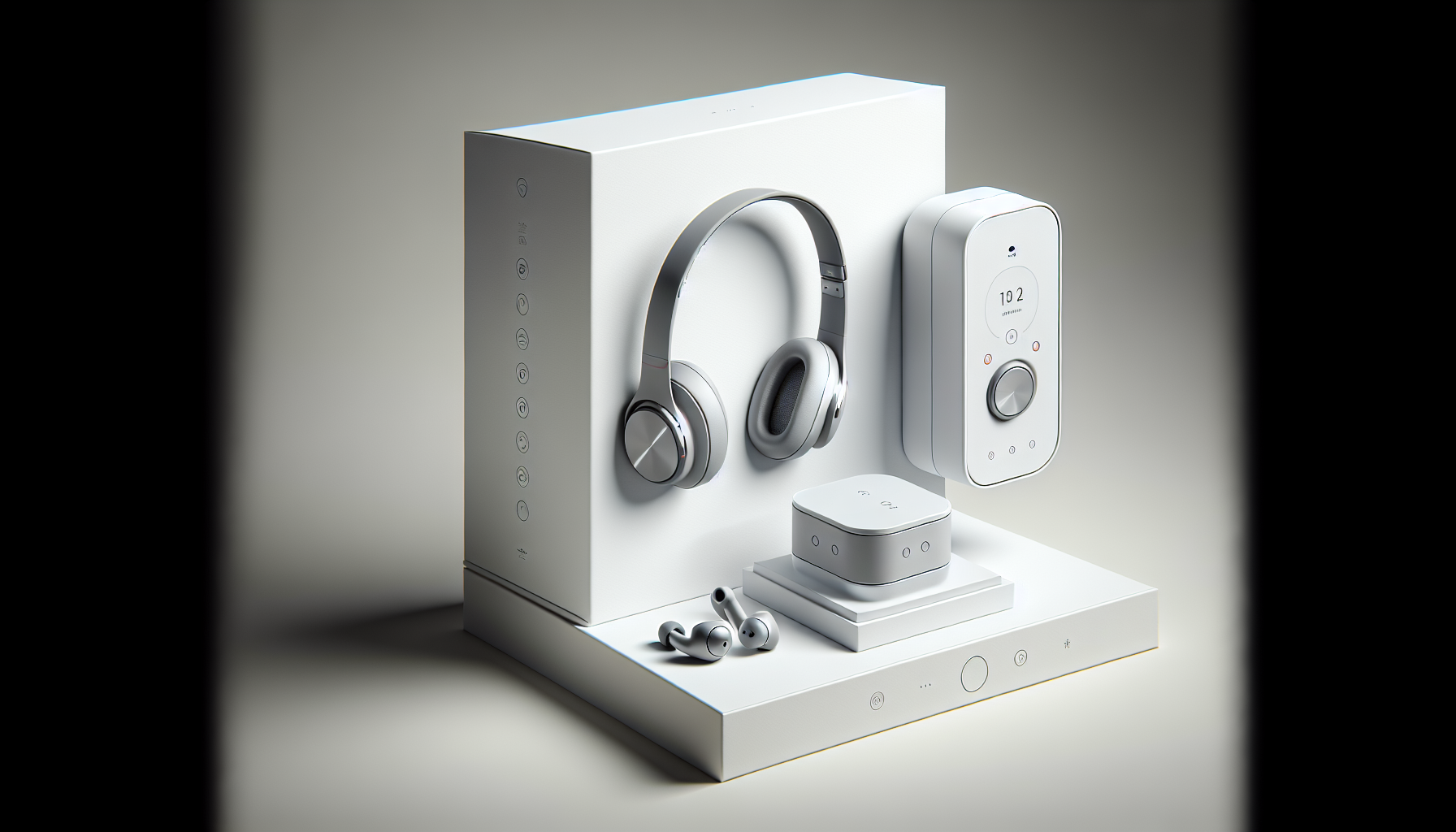
🎨 AI-generated illustration (EU AI Act 2026) — does not represent the actual appearance of the product. See the Amazon listing for official photos.
🔗 Affiliate links : Some links are Amazon affiliate links.
Get our best picks
Every week, our Amazon comparisons directly in your inbox.
No spam. Unsubscribe in 1 click.
Wireless Earphones or Headphones: Which Should You Choose?
Choosing between wireless earphones (in-ear earbuds) and wireless headphones (over-ear or on-ear) comes down to how you listen, where you listen, and what matters most—comfort, sound quality, noise cancelling, battery life, microphone performance, and portability. Both options can deliver excellent audio, but they’re designed for different priorities. This buying guide breaks down the key differences, what to look for, and how to choose the best fit for your lifestyle.
Whether you’re commuting, working from home, traveling, working out, or taking calls on the go, the right choice can dramatically improve your daily experience. Let’s compare wireless earphones and headphones in a practical, decision-focused way.
Quick Summary: Earphones vs. Headphones
- Choose wireless earphones if you want maximum portability, a secure fit for workouts, and a compact charging case.
- Choose wireless headphones if you want stronger noise cancellation, more immersive sound, better comfort for long sessions, and more robust microphones for calls.
- Choose based on your environment: earbuds often win for commuting and gym use; headphones often win for office focus and travel.
Understanding the Main Types
Wireless Earphones (True Wireless or Neckband)
Wireless earphones typically come in two forms:
- True wireless earbuds: no cable between left and right. They’re the most portable and easiest to carry.
- Neckband earbuds: a cable connects both earbuds; they’re often more stable for workouts and can be easier to manage than true wireless.
Earphones are ideal if you want something lightweight that fits in a pocket or small bag.
Wireless Headphones (Over-Ear or On-Ear)
Wireless headphones include:
- Over-ear: larger cups that cover your ears, often delivering the best sound and comfort for long listening.
- On-ear: sit on top of the ears, usually lighter and more portable than over-ear models but may provide less isolation.
Headphones are often the better choice for deep listening, noise-sensitive environments, and extended sessions.
Key Buying Criteria (What Matters Most)
Before comparing specific models, use these criteria to narrow down your best option.
1) Fit, Comfort, and Stability
- Earphones: look for multiple ear tip sizes, secure fit designs, and sweat resistance if you exercise.
- Headphones: check headband padding, ear cup cushioning, weight distribution, and whether they clamp tightly.
Buying tip: If you wear glasses or have sensitive ears, try to prioritize models with ergonomic tips (earbuds) or softer, breathable pads (headphones).
2) Sound Quality and Tuning
- Earphones: good earbuds can sound surprisingly rich, but bass and soundstage depend heavily on driver quality and tuning.
- Headphones: larger drivers and sealed ear cups often deliver fuller bass and wider soundstage.
Buying tip: If you listen to bass-heavy music, prioritize strong low-frequency performance. For podcasts and vocals, prioritize clarity and balanced mids.
3) Noise Cancelling (ANC) and Transparency
- Earphones: ANC is common in premium earbuds; transparency mode is essential for commuting.
- Headphones: ANC is typically more effective due to better passive isolation and larger drivers/cups.
Buying tip: If you frequently travel or work in noisy environments, headphones usually provide a bigger improvement in isolation.
4) Battery Life and Charging
- Earphones: true wireless models often offer 4–8 hours per charge, with a case extending total playback (commonly 20–30+ hours).
- Headphones: many models offer 20–40 hours per charge, sometimes more depending on ANC usage.
Buying tip: If you need all-day listening without charging, headphones often have the advantage.
5) Microphone Quality for Calls
- Earphones: microphones are improving rapidly, but call quality can vary with wind and fit.
- Headphones: typically have better microphone placement and noise reduction, especially in windy outdoor conditions.
Buying tip: If you take lots of calls, look for features like wind noise reduction and multiple mic arrays.
6) Wireless Codec Support and Device Compatibility
- For many users, standard Bluetooth is fine. However, advanced codecs (like aptX, AAC, or LDAC—depending on your phone) can improve audio quality.
- iPhone users: prioritize AAC compatibility and reliable pairing.
- Android users: check for aptX or LDAC support if you have a compatible device.
Buying tip: If you care about high-resolution audio, verify codec support rather than assuming it.
7) Controls, App Features, and Ease of Use
- Look for customizable touch controls (earbuds) or physical buttons (headphones).
- Check companion app features: EQ tuning, ANC levels, firmware updates, and battery indicators.
Buying tip: If you use gloves or prefer tactile feedback, headphones with physical controls may be easier.
8) Durability and Water Resistance
- Earphones: check an IP rating (e.g., IPX4 or higher) for sweat and light rain.
- Headphones: also benefit from water resistance, especially for gym and travel.
Buying tip: If you sweat heavily, choose earbuds with a proven IP rating and stable fit.
Top Features to Look For (Must-Haves vs Nice-to-Haves)
Must-Have Features
- Comfort fit (ear tips or ear cushions)
- Reliable Bluetooth connection
- ANC and/or transparency mode if you commute or work in noise
- Good call microphones if you take meetings on the go
- Battery life that matches your daily routine
Nice-to-Have Features
- Multipoint pairing (connect to laptop + phone simultaneously)
- Spatial audio (great for movies and immersive tracks)
- Wireless charging for earbuds or headphones
- Custom EQ through an app
- Low-latency mode for gaming and video lip-sync
Product Recommendations (What to Buy by Use Case)
Below are practical recommendations and what to look for in each category. Availability and exact models can vary by region, but these buying criteria will help you select the right product.
Best for Commuting and Everyday Carry: Wireless Earphones
- Why earbuds: compact case, easy to store, and quick on/off.
- Look for: strong ANC, transparency mode, good wind-resistant mics, and a secure fit.
- Buying criteria checklist:
- ANC with multiple modes
- Comfortable ear tips (multiple sizes)
- IP rating suitable for workouts
- Battery case capacity that matches your schedule
Recommended approach: If you primarily listen to music and podcasts while walking or commuting, prioritize earbuds with effective ANC and a comfortable, stable fit.
Best for Focus and Travel: Wireless Over-Ear Headphones
- Why headphones: stronger noise isolation, larger drivers, and longer sessions without ear fatigue.
- Look for: high-quality ANC, comfortable padding, and excellent call microphones.
- Buying criteria checklist:
- Robust ANC performance
- Comfortable clamping force
- Long battery life (especially with ANC)
- Multipoint pairing for laptop + phone
Recommended approach: If you frequently fly, work in open offices, or want the most immersive sound, headphones are usually the better investment.
Best for Work Calls and Meetings: Headphones (Often)
- Why: larger ear cups can better isolate your voice and reduce background noise.
- Look for: multi-mic systems, wind noise reduction, and a stable Bluetooth connection.
- Buying criteria checklist:
- Clear microphone audio in reviews
- ANC that doesn’t distort voice
- Easy switching between devices
Recommended approach: If calls are a priority, test microphone performance via reviews or demo if possible.
Best for Gym and Sports: Earphones (With Secure Fit)
- Why earbuds: lighter and less likely to slip during exercise.
- Look for: secure ear hooks or wing tips, sweat resistance, and stable Bluetooth range.
- Buying criteria checklist:
- IPX4+ rating
- Ear tip stability (and included sizes)
- Good bass control for energetic tracks
Recommended approach: For running and HIIT, choose earbuds designed for movement and sweating.
Wireless Earphones vs. Headphones: Side-by-Side Comparison
| Category | Wireless Earphones (Earbuds) | Wireless Headphones (Over/On-Ear) |
|---|---|---|
| Portability | Excellent (pocket/case) | Good (bag-friendly, bulkier) |
| Comfort for long sessions | Depends on fit; can fatigue if poorly sized | Often better for extended listening |
| Noise cancelling | Good to excellent in premium models | Typically stronger due to passive isolation |
| Sound immersion | Good; limited by smaller drivers | Often more immersive and spacious |
| Call quality | Improving; varies with fit and wind | Usually more reliable microphones |
| Battery life | Case extends total time; per-charge shorter | Long per-charge playback |
| Workout suitability | Generally best for movement | Can be warm/heavy for some users |
| Controls | Touch controls; sometimes less tactile | Buttons/knobs often easier |
How to Choose the Right Option for You
Choose Earphones If You Want…
- Maximum portability and quick access
- A secure fit for walking, commuting, or workouts
- ANC and transparency in a compact package
- A lower “presence” feel (less bulky)
Choose Headphones If You Want…
- Best-in-class noise cancelling and passive isolation
- More immersive sound for music, movies, and gaming
- Comfort during long listening sessions
- More dependable microphone performance for calls
- Long battery life without frequent charging
Buying Tips to Avoid Common Mistakes
- Don’t ignore fit: earbuds that don’t seal properly will sound worse and reduce noise cancelling.
- Check ANC behavior: some models can create pressure or affect audio balance—look for reviews mentioning comfort.
- Verify battery expectations: ANC and high volume reduce battery; choose based on your real usage.
- Consider multipoint pairing: if you switch between phone and laptop, this saves time.
- Match codec to your device: especially if you’re an audio enthusiast.
Conclusion
Wireless earphones and wireless headphones both offer compelling advantages, but they shine in different scenarios. If you value portability, secure movement, and compact daily convenience, wireless earphones are usually the smarter choice—especially for commuting and workouts. If you prioritize immersive sound, stronger noise cancelling, longer comfort for extended sessions, and more reliable call microphones, wireless headphones are often the better investment.
Use the buying criteria in this guide—comfort and fit, ANC and transparency, battery life, microphone quality, codec compatibility, and controls—to select the model that matches your routine. With the right choice, you’ll enjoy clearer calls, more satisfying audio, and a listening experience that fits your day.