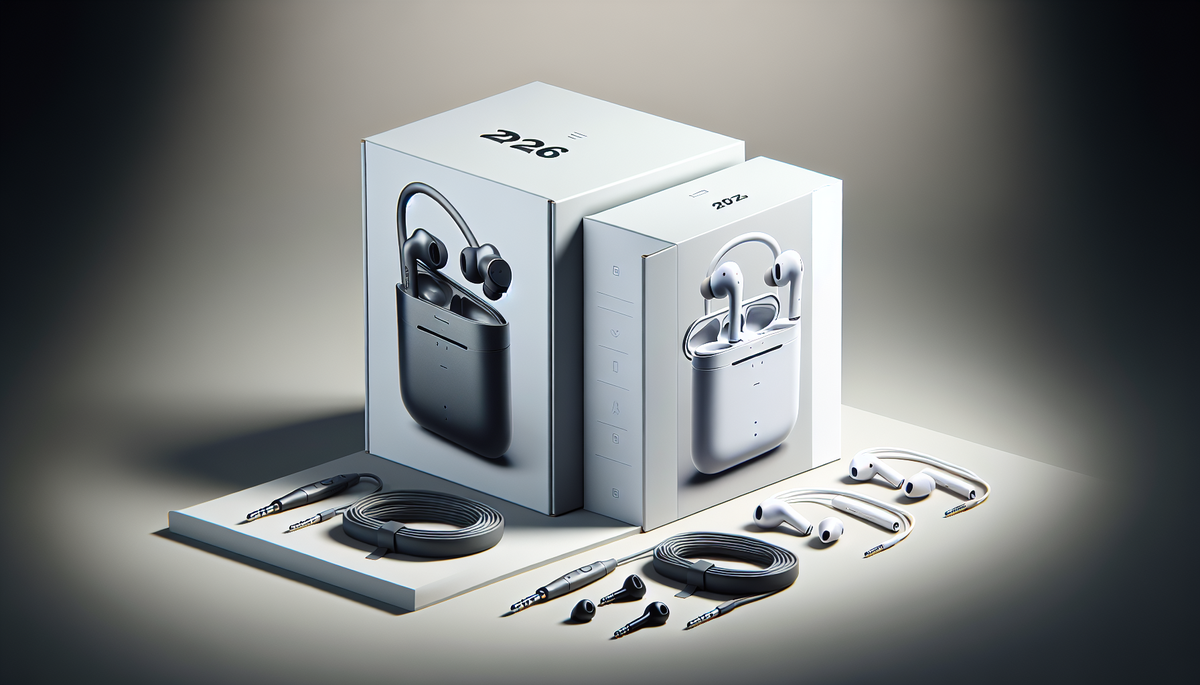
🎨 AI-generated illustration (EU AI Act 2026) — does not represent the actual appearance of the product. See the Amazon listing for official photos.
Introduction
So you’re weighing up wireless earbuds versus wired earbuds, and honestly, it’s not as simple as “wireless is better” or “wired is always best”. Both have their place, and the right choice depends on how you listen day to day—your commute, your gym sessions, your calls, and whether you care more about convenience or pure sound quality.
Get our best picks
Every week, our Amazon comparisons directly in your inbox.
No spam. Unsubscribe in 1 click.
In this showdown, we’ll look at what actually matters in real life: comfort, battery life, audio performance, reliability, and the little annoyances that can make or break your listening experience. By the end, you’ll know which pair fits your routine and your priorities.
Critères de choix
- Sound quality (and what you notice): If you’re into detailed, crisp audio, wired can still hold an edge—especially with higher-quality sources. Wireless has improved massively, but codec support and compression can make a difference depending on your phone and earbuds.
- Latency for video and gaming: Wireless can introduce a small delay. For casual scrolling, it’s fine; for gaming or watching action scenes, wired usually feels more “locked in”.
- Battery life vs hassle: Wireless means charging. Wired means you never run out of power—though your phone might still. If you’re always on the move, battery management becomes part of the deal.
- Call quality and mic performance: Hands-free calls rely on good microphones and noise handling. Some wireless models are excellent; others sound muffled in windy streets. Wired can be surprisingly consistent, especially with decent mic designs.
- Comfort and fit: Earbuds that seal well (wireless or wired) will usually sound better and feel more secure. If you get ear fatigue, look for lightweight designs and multiple ear tip sizes.
- Connectivity and reliability: Wireless is convenient, but occasionally you’ll deal with pairing hiccups, Bluetooth dropouts, or signal issues in busy places. Wired is plug-and-play—no drama.
- Compatibility: Do you use a phone with a headphone jack? If not, you’ll need an adapter for wired. If you do, wired can be dead simple.
- Control options: Wireless earbuds often include touch controls and voice assistants. Wired usually relies on inline buttons, which can be less intuitive but still reliable.
Avantages
Wireless earbuds win on convenience, no question. You can pull one out to take a call, pop them in quickly, and forget about cables tangling with your coat sleeve or getting snagged on your bag strap. For commuting, walking the dog, or quick errands, that freedom is genuinely brilliant.
They’re also great for workouts. Many people like that they can move without cable drag, and you can typically find models with sweat resistance and secure fits. Plus, if you’re the kind of person who likes switching between devices—phone to laptop to tablet—wireless can feel seamless when it’s set up properly.
On the sound side, modern wireless earbuds often support features like active noise cancelling (ANC) and adaptive sound modes. ANC can be a game-changer on trains and buses, where the low, constant rumble makes listening tiring. Even without ANC, wireless can deliver a satisfying, punchy sound that’s tuned for everyday listening.
Wired earbuds, though, still have a few quiet superpowers. First up: consistent audio. There’s no Bluetooth handshake, no codec negotiation, and no battery to worry about. If you’ve got a good wired setup, the sound tends to stay stable from start to finish.
Wired also tends to be the safer bet for latency-sensitive use. If you watch videos with subtitles, play rhythm games, or just want everything to feel tightly synchronised, wired often feels more “instant”. And for audiophiles, wired can be more straightforward: you’re sending an analogue signal (or a direct digital path via USB-C adapters) without the same compression pipeline you might see in Bluetooth.
Finally, there’s cost and longevity. Wired options are often simpler and easier to replace if a cable gets damaged. Wireless earbuds can be more expensive, and if the charging case or battery degrades over time, replacements can be more of a headache. That said, good wireless models can last ages—just be mindful of how you store and charge them.
FAQ
Q? Wireless earbuds sound worse than wired—true or myth?
It’s not a blanket rule. Wireless has come a long way, and many earbuds sound excellent for everyday use. That said, wired can still offer an edge in clarity and consistency, especially if you’re using higher-quality sources or you’re sensitive to compression and codec differences.
Q? Are wired earbuds still worth it if I don’t have a headphone jack?
They can be, yes. You’ll just need the right adapter (often USB-C to 3.5mm). If you already use that adapter for other wired gear, it’s usually straightforward. If not, you might find wireless is just less hassle day to day.
Q? Do wireless earbuds have noticeable delay for video and calls?
For calls, most people won’t notice much. For video, it depends on the earbuds, your phone, and the app. Gaming and fast action can make latency more obvious, so wired is often the safer choice if timing really matters to you.
Conclusion
So, which should you choose? If you want freedom, quick switching, and a more comfortable commute (especially with ANC), wireless earbuds are usually the winner. They’re simply easier to live with, and modern models can sound brilliantly good.
If you value reliability, stable audio from minute one to the end, and minimal latency, wired earbuds still earn their keep. They’re often the “set it and forget it” option, and they don’t ask you to charge anything.
Ultimately, pick based on your routine: if your day is full of movement and you hate cables, go wireless. If you’re picky about timing, consistent sound, or you prefer a no-fuss plug-in experience, wired will feel right at home.
Our picks — Wireless Earbuds vs Wired Earbuds: The 2026 Showdown
Apple AirPods Pro (2nd generation)
Active noise cancelling with a comfortable in-ear fit.
Samsung Galaxy Buds2 Pro
Premium sound with adaptive noise control and great call quality.
Sony WF-1000XM5
Top-tier noise cancelling and detailed audio for everyday use.
Jabra Elite 8 Active
Secure fit with strong battery life and water-resistant design.
Sennheiser IE 200
Balanced wired sound with a comfortable, lightweight design.
🔗 Affiliate links : Some links on this page are Amazon affiliate links. As an Amazon Associate, we earn from qualifying purchases at no extra cost to you.
🏆 Top 5 — Best écouteurs sans fil
↻ Mis à jour le 07/04/2026 · Données 2025-2026