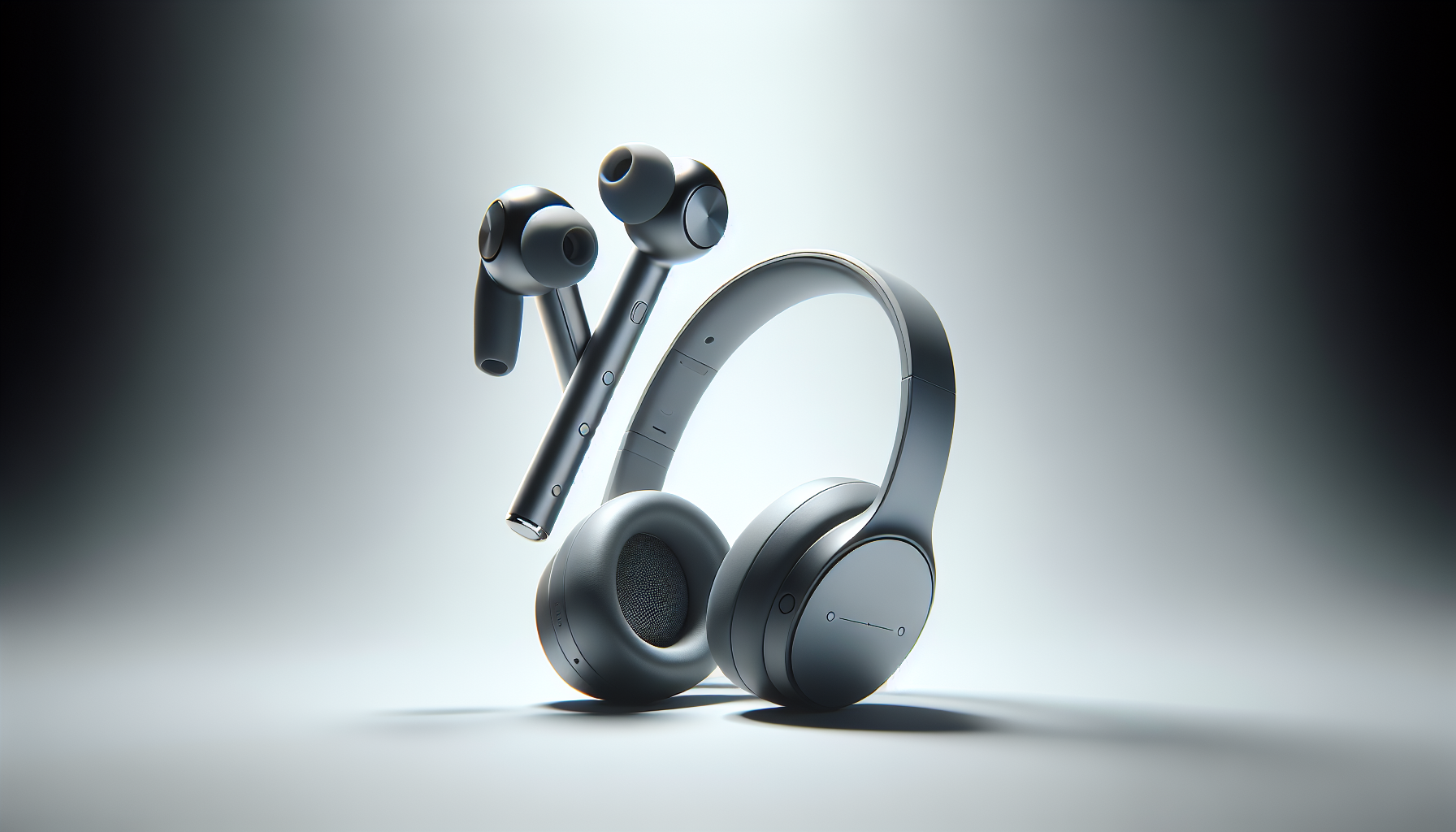
🎨 AI-generated illustration (EU AI Act 2026) — does not represent the actual appearance of the product. See the Amazon listing for official photos.
🔗 Affiliate links : Some links are Amazon affiliate links.
Get our best picks
Every week, our Amazon comparisons directly in your inbox.
No spam. Unsubscribe in 1 click.
Wireless Earbuds or Headphones: Which Should You Choose?
Choosing between wireless earbuds and wireless headphones comes down to how you listen, where you listen, and what matters most—comfort, portability, sound quality, call performance, or battery life. Both categories have advanced rapidly: many earbuds now offer active noise cancelling (ANC), spatial audio, and strong app-based EQ controls, while many over-ear and on-ear headphones deliver larger drivers, more immersive sound, and better long-session comfort.
This buying guide helps you decide by comparing key features, outlining the best buying criteria, and recommending product types and specific models to consider. Whether you’re commuting, working, exercising, or traveling, you’ll find practical guidance below.
Quick Decision Guide
Choose wireless earbuds if you want…
- Maximum portability (pocketable case)
- Hands-free convenience for calls and workouts
- Lower travel footprint (fits in small bags)
- Stability during movement with secure fit tips
- Feature-rich controls (touch gestures, voice assistants)
Choose wireless headphones if you want…
- More immersive sound (typically larger drivers)
- Better noise isolation (especially with ANC)
- Long-session comfort (over-ear pads distribute pressure)
- Fewer fit issues (no ear-tip sealing required)
- Better mic performance in many models
Key Differences That Matter
1) Portability and everyday use
Earbuds are easier to carry and use in short bursts—walking, commuting, quick errands, and desk work. Most people prefer earbuds for daily “grab-and-go” listening.
Headphones (on-ear/over-ear) are bulkier, but they’re often more comfortable for extended use and can be more practical for home listening, office focus, and travel where you don’t need pocket storage.
2) Comfort and fit
Earbuds rely on a seal and fit. Comfort depends on ear shape, tip size, and whether the design is lightweight or pressure-heavy. Look for:
- Multiple tip sizes (foam or silicone)
- Stability fins or secure-fit designs for sports
- Weight distribution (lighter is usually better for long sessions)
Headphones distribute pressure across the head and ears. Comfort depends on:
- Headband padding
- Ear cup cushioning (memory foam, breathable materials)
- Clamping force (too tight can cause fatigue)
3) Noise cancelling (ANC) and isolation
Both can offer ANC, but the type of isolation differs:
- Earbuds can be excellent for commuting and office noise, especially with adaptive ANC and good fit.
- Over-ear headphones usually provide stronger passive isolation due to the larger ear coverage, often resulting in more noticeable noise reduction.
If you frequently fly or work in loud environments, headphones often have the edge.
4) Sound quality and bass response
Because headphones often use larger drivers and more air movement, they frequently deliver:
- Deeper bass
- Wider soundstage
- More detailed mids and highs at higher volumes
That said, premium earbuds can sound surprisingly good, especially models with strong DSP tuning and support for advanced codecs. Your preference matters—some listeners prefer earbuds’ punchy, close-up sound, while others want the “bigger” presentation of over-ear designs.
5) Battery life and charging
Typical ranges:
- Earbuds: often 4–8 hours per charge, with 1–4 additional charges from the case.
- Headphones: often 20–40 hours (ANC on varies widely), sometimes more.
If you’re a long-session listener who forgets to charge, headphones can be more forgiving. If you prefer quick top-ups, earbuds with a charging case are convenient.
6) Call quality and microphone performance
For frequent calls, look for:
- Multiple microphones (beamforming)
- Wind noise reduction
- Good voice processing (DSP)
Many earbuds are excellent for calls in quiet to moderate environments, but in noisy streets, headphones often perform better due to better microphone placement and stronger processing.
Top Features to Look For (Buying Criteria)
Audio and connectivity
- Codec support: If your phone supports it, prioritize modern codecs (e.g., AAC and newer Bluetooth standards). For Android, aptX support can matter depending on your device.
- Stable Bluetooth: Look for low-latency modes if you watch videos or play games.
- Multipoint pairing: Lets you connect to two devices (phone + laptop) without re-pairing.
- App EQ: Custom tuning can significantly improve your listening experience.
Noise cancelling and transparency
- ANC modes: Adaptive ANC is useful for changing environments.
- Transparency mode: Helps you hear announcements and traffic without removing the device.
- Comfort fit for ANC: Earbuds need a good seal; headphones need comfortable pads.
Controls and usability
- Touch controls vs buttons: Buttons can reduce accidental taps; touch controls can feel smoother.
- Voice assistant support: Useful for quick commands.
- Wear detection: Pauses audio automatically when removed.
Durability and water resistance
- IP rating: For workouts, look for at least IPX4; higher ratings are better for sweat and rain.
- Case durability: Drop resistance can matter if you toss it in a bag.
Charging and battery
- Charging case type: USB-C is standard; wireless charging is a bonus.
- Battery transparency: Check real-world runtimes with ANC on.
Product Recommendations by Use Case
Best for commuting and everyday portability (Earbuds)
If you want ANC, compact size, and easy switching between devices, earbuds are usually the best fit. Consider:
- Premium ANC earbuds: Look for adaptive ANC, strong transparency, and good mic processing.
- Sport-ready earbuds: Prioritize secure fit tips, IP rating, and sweat resistance.
Examples to consider (availability and pricing vary by region):
- Sony WF-1000XM5 (strong ANC and sound tuning)
- Apple AirPods Pro (2nd Gen) (excellent transparency and integration for iPhone users)
- Samsung Galaxy Buds2 Pro (solid ANC and features for Samsung ecosystems)
Best for focused work and travel (Headphones)
If you’re often in noisy spaces or want maximum immersion, headphones tend to deliver more consistent noise reduction and comfort over long sessions. Consider:
- Over-ear ANC: Best for flights and office noise.
- Comfort-first designs: Look for breathable pads and moderate clamping force.
- Multipoint + strong battery: Helpful for laptop/phone switching.
Examples to consider:
- Sony WH-1000XM5 (top-tier ANC and premium sound)
- Bose QuietComfort series (excellent noise cancelling comfort for many users)
- Sennheiser Momentum series (balanced sound and feature sets)
Best for gaming and video watching (Either, depending on latency)
If latency matters, prioritize earbuds or headphones that explicitly support low-latency modes or gaming features. Also check:
- Whether there’s a dedicated app or “game mode”
- Compatibility with your platform (PC, PlayStation, Xbox, mobile)
- Stability in your typical environment (Bluetooth interference varies)
Wireless Earbuds vs Wireless Headphones: Comparison Table
| Category | Wireless Earbuds | Wireless Headphones |
|---|---|---|
| Portability | Excellent (pocketable case) | Good to moderate (larger carry size) |
| Comfort | Depends on fit/seal; can fatigue some users | Often better for long sessions; depends on headband pressure |
| Noise cancelling | Great if fit is secure; varies by model | Often stronger passive + ANC isolation |
| Sound quality | Strong for size; bass can be punchy | Typically fuller sound and wider soundstage |
| Battery life | Short per charge, long with case | Long per charge; fewer charging cycles |
| Call quality | Good to excellent; depends on mic processing | Often better in noisy environments |
| Workout suitability | Best when secure-fit and sweat resistant | Possible but less convenient for some sports |
| Best for | Commutes, errands, daily use | Work focus, travel, home listening |
How to Choose the Right One (Step-by-Step)
Step 1: Identify your top priority
- Portability → earbuds
- Maximum noise reduction → headphones
- Long desk sessions → headphones (usually)
- Sports and movement → earbuds
- Call-heavy day → whichever has better mic specs for your environment
Step 2: Match the product to your device ecosystem
Some features are ecosystem-dependent. If you’re deep in Apple’s ecosystem, earbuds like AirPods Pro often deliver seamless switching. If you use Android, check codec support and app features. With laptops, confirm multipoint and Bluetooth stability.
Step 3: Consider comfort tests before committing
- Earbuds: ensure you can try different tip sizes.
- Headphones: check return policies; comfort is personal and depends on clamping force.
Step 4: Decide on ANC vs transparency balance
If you need to hear announcements or stay aware outdoors, prioritize strong transparency mode and natural sound. If you mostly want to block the world, prioritize ANC effectiveness and comfort with ANC on.
Common Mistakes to Avoid
- Ignoring fit (especially for earbuds). A poor seal can reduce bass and weaken ANC.
- Overlooking microphone quality if you take many calls.
- Assuming battery specs are identical—ANC on usually reduces runtime.
- Buying without checking your device compatibility (codecs, multipoint, app features).
Conclusion
Wireless earbuds are the best choice for most people who want portability, hands-free convenience, and secure listening during daily routines or workouts—especially when you pick models with strong ANC, good transparency, and a comfortable fit. Wireless headphones are ideal if you prioritize immersive sound, maximum noise isolation, and comfort for long sessions, such as working, studying, or traveling.
If you’re still unsure, choose based on your environment: commute and move frequently → earbuds; sit for hours or travel often → headphones. Either way, focus on the features that matter most—ANC quality, mic performance, codec compatibility, comfort, and battery life—and you’ll end up with a wireless setup that truly fits your lifestyle.