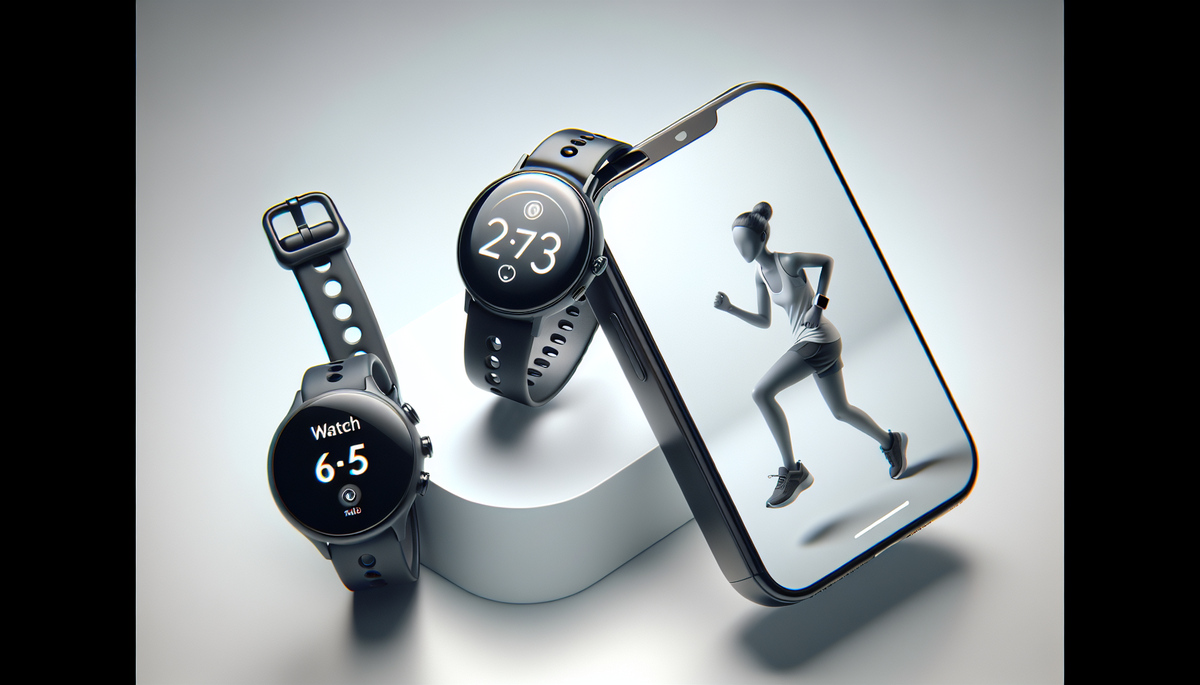
🎨 AI-generated illustration (EU AI Act 2026) — does not represent the actual appearance of the product. See the Amazon listing for official photos.
🔗 Affiliate links : Some links on this page are Amazon affiliate links. As an Amazon Associate, we earn from qualifying purchases.
Get our best picks
Every week, our Amazon comparisons directly in your inbox.
No spam. Unsubscribe in 1 click.
Introduction
Between a smartwatch and a running app, the question comes up all the time. And honestly, there isn’t just one right answer: it all depends on your training style, your goals, and how much precision you want day to day.
The watch gives you information right on your wrist while you run. The app, on the other hand, relies on your phone and often offers a more “software-based” experience: planning, deeper analysis, history, communities… But you have to carry your phone with you, and you don’t always check your data at the right moment.
Let’s look at how to choose simply, without getting lost in the technical details.
Selection criteria
- What you want to measure during the run: pace, distance, heart rate, training zones, cadence… A watch is often more practical in real time.
- How often you train: if you run often, a watch can become a real companion. If you train more occasionally, an app is sometimes more than enough.
- Comfort and discipline: some people like running “without a phone.” Others, on the contrary, find it normal to have their phone in a pocket or armband.
- The type of workout: easy runs, intervals, structured plans… An app shines when you follow detailed sessions. A watch is great for immediate cues.
- Post-run analysis: an app often offers more detailed charts and feedback. Watches do the job too, but the ecosystem depends a lot on the brand.
- Battery life: the watch needs charging, while the phone needs to be charged enough. If you do long runs, think about both batteries.
- GPS accuracy: both can be good, but it depends on the device, the settings, and the conditions (dense city, forest, weather).
- Your budget: generally, a smartwatch costs more than an app. But you’re also paying for the convenience of a dedicated device.
Advantages
The smartwatch has a big advantage: it gives you the essentials right away. You can check your pace, track your heart rate, and stay in your zones without pulling out your phone. The result: you keep your rhythm, especially when you’re doing intervals or when you want to control an “easy” run.
Another nice point: some watches offer more “sport” features like pace alerts, guided workouts, or recovery indicators. And because it’s worn on the wrist, you don’t have to wonder whether your phone is properly launched, whether the app started correctly, or whether it recorded everything.
On the running app side, the strength is flexibility. You can choose the app you like, enjoy a clear history, import routes, follow training plans, and analyse your runs in more detail. For many runners, it’s also simpler day to day: you use one device (your phone), and you avoid managing a watch as well.
And then there’s the “customisation” side: some apps let you manage your goals, compare workouts, visualise your progress, and even share your results. If you like understanding what works (and what doesn’t), the “software” approach can really motivate you.
In the end, the best option often depends on one thing: do you want cues during the run, or analysis afterwards? Both matter, but one choice usually stands out depending on your habits.
FAQ
Q ? Is a smartwatch essential for making progress?
No. You can make great progress with an app and good tracking. What matters is consistency and the ability to measure what you’re doing (pace, distance, effort, and sometimes heart rate). The watch mainly helps make tracking simpler and more “live”.
Q ? Does the app work well without a watch?
Yes, and for many runners, that’s even enough. If you have a phone with reliable GPS and you start the recording properly, you’ll have a solid base: distance, pace, route, history. The only thing to watch is battery life and the fact that you need to carry your phone.
Q ? Watch or app: which is more accurate for GPS?
It depends on the model and the environment. In general, a watch can be very good, especially if it gets a strong signal. An app can also be accurate, but it depends a lot on the phone’s GPS reception, the quality of the sensor, and whether you start recording at the right time.
Conclusion
If you want a simple answer: choose the watch when you want clear cues during the effort, without taking out your phone. Choose the app when you prefer a more complete experience for analysing, planning, and keeping a detailed history.
And if you’re still hesitating, keep this in mind: you don’t need to measure everything. The best tool is the one you actually use on every run. So make your choice based on your daily routine, not on what looks the most “sport tech”.