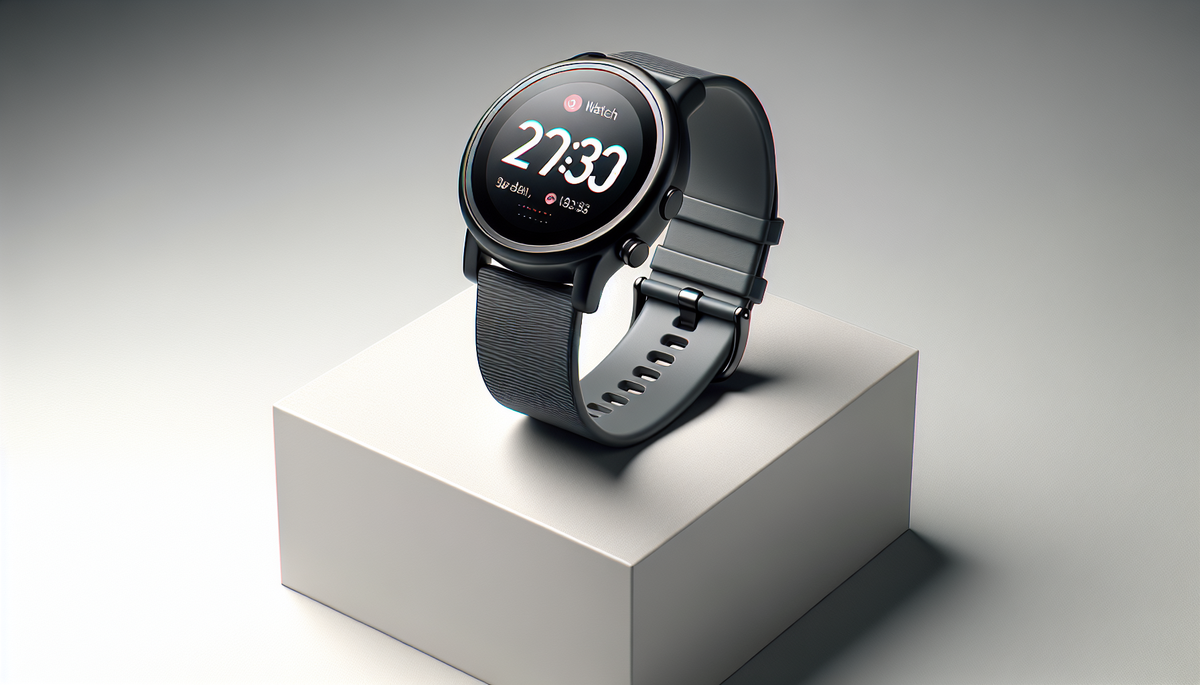
🎨 AI-generated illustration (EU AI Act 2026) — does not represent the actual appearance of the product. See the Amazon listing for official photos.
Get our best picks
Every week, our Amazon comparisons directly in your inbox.
No spam. Unsubscribe in 1 click.
Introduction
You get up, rush between appointments, eat quickly… then the day fades away without you really noticing where the time went. What if, instead of adding yet another app, you used a smartwatch to help you regain control, simply and effectively?
A smartwatch isn’t magic, but it can become a real little coach on your wrist. It reminds you, guides you, and gives you benchmarks to help you organise your days better. Whether you want to move more, sleep better, or reduce stress, it can fit naturally into your routine.
Selection criteria
- Battery life: nothing is more frustrating than charging every two days. Check the advertised battery life and, above all, how it changes with GPS, always-on display, or heavily used sensors.
- Compatibility with your phone: some watches work better with Android, others with iPhone. Before you buy, make sure the brand’s app works properly with your model.
- Everyday comfort: a flexible strap, reasonable weight, suitable size… If the watch bothers you, you’ll wear it less. And without regular wear, there are no benefits.
- Activity tracking that makes sense to you: you don’t need 50 stats. What matters is getting clear information: steps, activity, heart rate, and customisable goals.
- Sensor quality: heart rate sensor, sleep tracking, sometimes SpO2 (blood oxygen). The readings aren’t perfect, but they should remain consistent over time.
- Readable display: in bright sunlight, during sport, or at night. A good screen is also about comfort and quick access to information.
- Useful features for you: notifications, calls, music, contactless payment, sport mode, stress tracking… Choose what fits your daily life, not a theoretical checklist.
Benefits
A smartwatch can improve your routine in several ways, often more concretely than you might first imagine.
1) You move more without even realising it.
Simply seeing your steps or your progress throughout the day can change your habits. You get up to “hit the goal,” take the stairs, or go for an evening walk. And because the watch stays on your wrist, the encouragement is constant, without needing to open an app.
2) You sleep better… or at least understand what’s going on.
Sleep tracking gives you benchmarks: bedtime, perceived quality, sleep phases, night-time awakenings. It’s not a medical diagnosis, but it’s a starting point for adjustments. For example: reduce phone use in the evening, keep a more stable wake-up time, or observe the effect of a more stressful evening.
3) You manage stress with simple signals.
Some watches offer breathing exercises, stress indicators, or reminders to take a break. Even if you’re not “into” meditation, a few guided minutes can be enough to break the spiral. And sometimes the most useful thing is simply noticing: “Okay, I’m tense, I need a break.”
4) You don’t miss the important stuff anymore.
Notifications on your wrist mean you don’t have to pull out your phone every time. You can quickly see a call, an important message, or a reminder. The result: fewer distractions, more flow throughout the day. And if you work a lot, that’s a real comfort boost.
5) You adapt your workouts, even if you’re a beginner.
Whether you walk, run, or do strength training, the watch can help you stay at the right intensity. Data like heart rate, effort zones, or activity tracking lets you improve without overdoing it. You don’t need to be a hardcore athlete. The goal is consistency.
6) You keep a steadier rhythm.
A routine is often a matter of consistency. By helping you stick to schedules (activity, sleep, hydration depending on the model), the smartwatch makes it easier to build good habits. And when you see progress, even modest progress, you’re more motivated to keep going.
7) You customise it to your life.
The big strength is personalisation: goals, reminders, watch faces, sport profiles, “focus” or “rest” modes. You don’t have to turn everything on. A smart watch should make your life easier, not more complicated.
FAQ
Q? Is a smartwatch really useful every day?
Yes, especially if you want to organise your days better. Reminders, activity tracking, and sleep information can help you build better habits without extra effort.
Q? Are the measurements (sleep, heart rate) reliable?
They’re generally useful for spotting trends. Results can vary depending on the person and how the watch is worn, but over time, you can identify what really changes.
Q? Should you choose a smartwatch with GPS?
It depends on how you use it. If you often go out without your phone, built-in GPS is handy. Otherwise, for daily walking or short activities, it isn’t always essential.
Conclusion
A smartwatch can become a discreet but effective ally: it helps you move more, better understand your sleep, manage stress, and stay focused on what matters. The right choice is the one that fits your life. Take the time to check battery life, comfort, and the features that truly matter to you.
And above all, remember: the goal isn’t to have “numbers everywhere.” The goal is to build a routine that’s simpler, more enjoyable, and more consistent. A small win every day adds up.
Our selection — How a Smartwatch Can Improve Your Daily Routine
Apple Watch Series 9
Excellent for health tracking and iPhone integration with accurate sensors.
🔗 Affiliate links : Some links on this page are Amazon affiliate links. As an Amazon Associate, we earn from qualifying purchases at no extra cost to you.
🏆 Top 5 — Best montre connectée
↻ Mis à jour le 08/04/2026 · Données 2025-2026