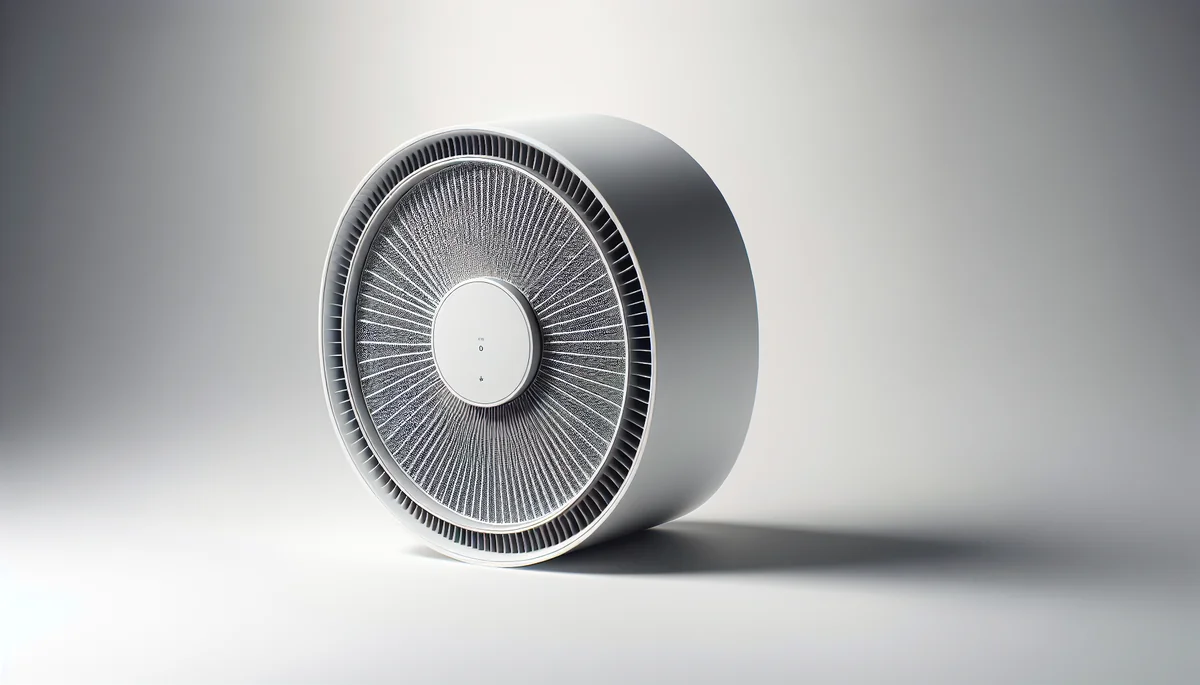
🎨 AI-generated illustration (EU AI Act 2026) — does not represent the actual appearance of the product. See the Amazon listing for official photos.
🔗 Affiliate links : Some links on this page are Amazon affiliate links. As an Amazon Associate, we earn from qualifying purchases.
Get our best picks
Every week, our Amazon comparisons directly in your inbox.
No spam. Unsubscribe in 1 click.
Introduction
Are you hesitating between an air purifier and a dehumidifier? It’s a very common question, especially when you want to improve your home without making the wrong choice. The basic idea is simple: one helps clean the air, the other helps reduce humidity. But in real life, it all depends on what’s going on in your home: allergies, odours, mould, a “heavy” feeling in the air, condensation… In short, there isn’t just one answer.
In this article, we’ll clarify the differences, give you clear decision criteria, and help you identify the right appliance for your needs. Promise: no complicated jargon.
Criteria for choosing
- The main problem: if you see mould, if it smells “stale,” or if you have condensation (on windows, walls, cupboards), humidity is often the heart of the issue. If, on the other hand, you have allergies, dust, pollen, or an irritating air sensation, an air purifier is generally more relevant.
- Humidity level (practical benchmark): a dehumidifier is especially useful when the air is too humid. If you don’t have a hygrometer, you can start by observing: sticky-feeling rooms, regular fogging, textiles that dry poorly, persistent odours.
- Area and use: some purifiers are designed for a specific room (bedroom, living room), while dehumidifiers are often used to treat a more “humid” area (basement, bathroom, laundry room). Think about where you really want to feel the difference.
-
Type of nuisance:
- Pollen, dust, smoke, pet hair: more of an air purifier job.
- Humidity, mould, odours linked to humidity: more of a dehumidifier job.
- Both at the same time? That happens often. In that case, the two appliances can complement each other.
- Everyday comfort: an air purifier can be quieter in night mode, but it may run continuously depending on use. A dehumidifier, on the other hand, can switch on to maintain a stable humidity level. In both cases, check the noise level and the available modes.
- Filtration and maintenance: for an air purifier, filters play a key role (and they need replacing). For a dehumidifier, you mainly monitor the water tank, clean the vents, and, depending on the model, manage defrosting or low-temperature operation.
Benefits
Air purifier: the main advantage is that it tackles particles suspended in the air. You can notice a difference fairly quickly, especially if you’re sensitive to allergies or if you often deal with dust. The strengths people usually appreciate: air that feels lighter, less irritation, and a better feeling in the room where it’s running. Depending on the model, it can also help reduce certain odours linked to particles (although for very stubborn odours, humidity and the source of the problem matter a lot).
Dehumidifier: its advantage is that it acts on the factor that encourages mould and bad odours. By reducing humidity, you limit the spread of fungi and make the air more comfortable. It’s especially useful in spaces where air tends to stagnate: basement, bathroom, laundry room, poorly ventilated rooms. Plus, when humidity drops, laundry often dries better (and that’s something we can’t say enough).
And the really good news? If your problem is “mixed,” you can also combine the two. For example, a dehumidifier to improve the air more deeply, and an air purifier to capture what’s floating in the air. The goal isn’t to pile on appliances, but to address the cause and the symptoms in the right place.
FAQ
Q?
How do I know whether I need an air purifier or a dehumidifier?
If you have mould, condensation, stale odours, and a heavy feeling in the air, think dehumidifier first. If you’re mainly dealing with allergies, dust, pollen, or particles in the air, the purifier is more suitable.
Q?
Can an air purifier replace a dehumidifier?
Not really. An air purifier mainly treats particles and some odours linked to the air. It doesn’t reduce humidity in the same way. If your main issue is excess humidity (mould, fogging, odours), a dehumidifier will be more effective.
Q?
Should they be used at the same time?
It depends on your home. If you have both humidity and air-quality issues (allergies, dust, pets), the two can complement each other. Otherwise, it’s better to choose the appliance that targets the main problem so you don’t pay for “too much.”
Conclusion
So, air purifier or dehumidifier? The right choice is the one that addresses your real problem. The air purifier is ideal when you want to improve air quality by targeting particles. The dehumidifier is the best option when the air is too humid and that leads to condensation, odours, and mould.
If you want a simple rule: irritating, allergy-triggering air = more of an air purifier. heavy air, fogging, odours, marks = more of a dehumidifier. And if you’re dealing with both, you can combine them, but always with the idea of treating the cause, not just “masking” the symptoms.