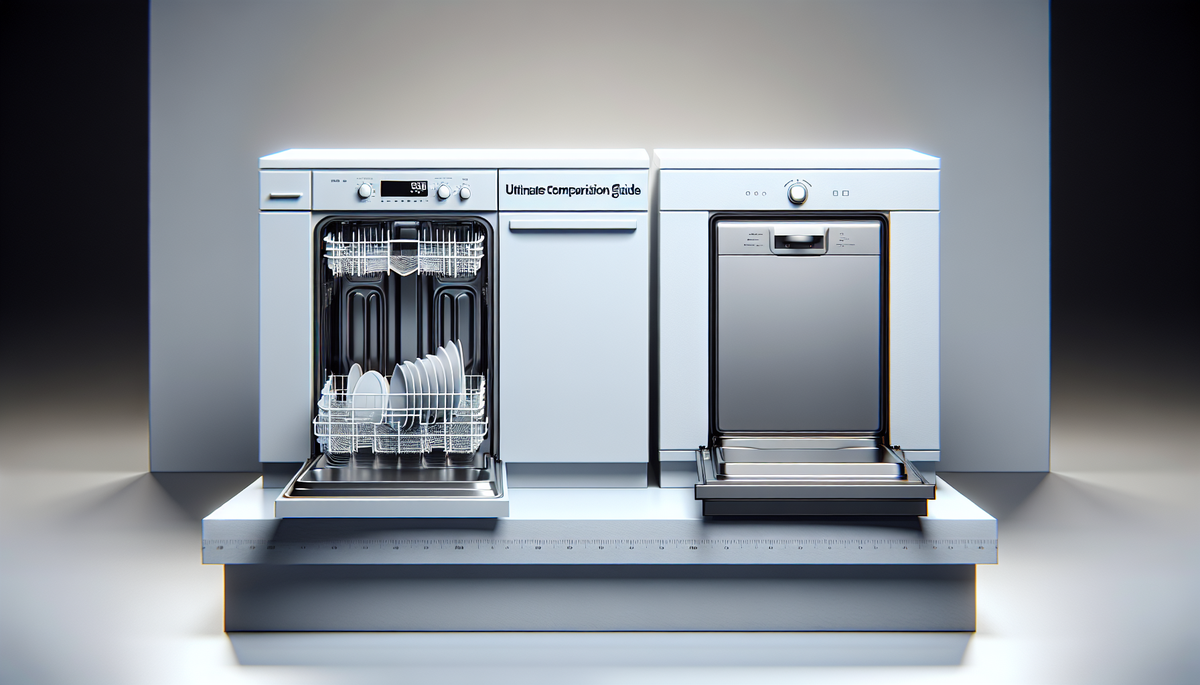
🎨 AI-generated illustration (EU AI Act 2026) — does not represent the actual appearance of the product. See the Amazon listing for official photos.
🔗 Affiliate links : Some links on this page are Amazon affiliate links. As an Amazon Associate, we earn from qualifying purchases.
Get our best picks
Every week, our Amazon comparisons directly in your inbox.
No spam. Unsubscribe in 1 click.
Introduction
Choosing between a built-in and a portable dishwasher can feel surprisingly tricky, especially if your kitchen layout, budget, or lifestyle is a bit of a curveball. One minute you’re thinking, “Surely built-in is the best,” and the next you’re wondering whether a portable model could be more practical for your day-to-day.
In this guide, I’ll walk you through the real-world differences—what matters when you’re actually using the thing—so you can pick the dishwasher that fits your home rather than the other way around.
Critères de choix
- Space and layout: Built-in dishwashers are designed to slot neatly into a kitchen space, usually with plumbing already in place. Portable dishwashers need a bit less permanent commitment, but they do require somewhere to park them when they’re not in use.
- Installation effort: A built-in model typically means fitting, plumbing connections, and possibly integrated cabinetry work. Portable units are much easier—often you just connect to a tap (or use the included adapter) and you’re good to go.
- Capacity: Built-in dishwashers generally handle larger loads more consistently, which is great for families or anyone who hates doing multiple cycles. Portable models can still be excellent, but you may need to run them a bit more often depending on how much you cook.
- Noise level: If your kitchen is open-plan, noise matters. Built-in units are often installed in a way that can help with sound insulation. Portable models vary, but they might be a touch noisier because they’re closer to your living space.
- Water and energy efficiency: Both types can be efficient, but built-in models often have more programme options and better overall performance at scale. Portable models can be very efficient too—just check energy ratings and water consumption per cycle.
- Flexibility and moving house: If you rent, or you’re the sort of person who moves every few years, portability can be a lifesaver. Built-in dishwashers are harder to take with you, and removing one can be a bit of a hassle.
- Ease of use: Look at the controls, cycle variety, and whether they suit your routine. If you often do quick washes or want eco programmes for everyday use, make sure the portable model actually offers what you’ll use.
- Drying performance: Drying is where some dishwashers disappoint. Built-in models often do better with full loads, while portable ones can be great too—just check reviews specifically mentioning drying.
Avantages
Built-in dishwashers tend to win on “set it and forget it.” Once they’re installed, they’re part of the kitchen routine, and you don’t have to think about storage or where the machine will sit. They’re also ideal if you regularly wash bigger batches—think dinner parties, family meals, or just the weekly build-up that happens when life gets busy.
Another big advantage is integration. Many built-in models blend into the cabinetry, so your kitchen looks neat and cohesive. If you like a tidy, streamlined setup, this is a real plus. Plus, built-in dishwashers often come with a wider range of programmes, including eco and intensive options, which can help you balance cleaning power with running costs.
Portable dishwashers, on the other hand, are brilliant when you want flexibility without the installation headache. They’re a great choice for flats, smaller kitchens, or homes where plumbing work isn’t ideal. You can move them as needed, and if you’re not sure how long you’ll stay in a property, that flexibility is priceless.
Portables are also handy for occasional heavy use. For example, if you’re hosting guests and suddenly your sink becomes a battlefield, a portable unit can be a quick upgrade. Many people find they’re a lifesaver for busy periods, even if they don’t replace a built-in dishwasher long term.
In short: built-in is usually best for maximum convenience and consistent capacity, while portable is best for adaptability and lower commitment. The “right” choice depends on how you live, not just what the product description promises.
FAQ
Q? Which is better for a family?
Generally, a built-in dishwasher is the better fit for families because it usually offers higher capacity and can handle bigger loads more efficiently. If you’re a bit more limited on space or you rent, a portable model can still work well—just be prepared to run more cycles or wash in batches.
Q? Are portable dishwashers actually convenient?
They can be, yes—especially if you choose one with an easy tap connection and a sensible layout. The main “trade-off” is that you’ll need a place to store it and it may not feel as seamless as a built-in. But for many homes, it’s a practical solution that genuinely saves time.
Q? Do built-in and portable dishwashers clean the same?
Both can clean brilliantly, but performance can vary by model and programme. Built-in units often shine with larger, fuller loads and more advanced wash cycles. Portable dishwashers can still deliver great results—just make sure you pick a model with good spray coverage and check user reviews for how it handles greasy dishes and drying.
Conclusion
If you’ve got the space and the plumbing sorted, a built-in dishwasher is usually the most convenient option—steady capacity, tidy kitchen integration, and a “run it whenever” kind of lifestyle. It’s the best choice when you want your dishwasher to be part of the routine, not an occasional project.
If you’re short on space, renting, or want flexibility, a portable dishwasher can be a brilliant compromise. It’s often easier to set up, easier to move, and can genuinely make kitchen life feel calmer—especially during busy weeks or when you’re hosting.
Ultimately, pick the one that matches your daily habits: how much you wash, how often you run it, and whether you want permanence or flexibility. Get that right, and you’ll be much happier with your choice long after the first cycle.