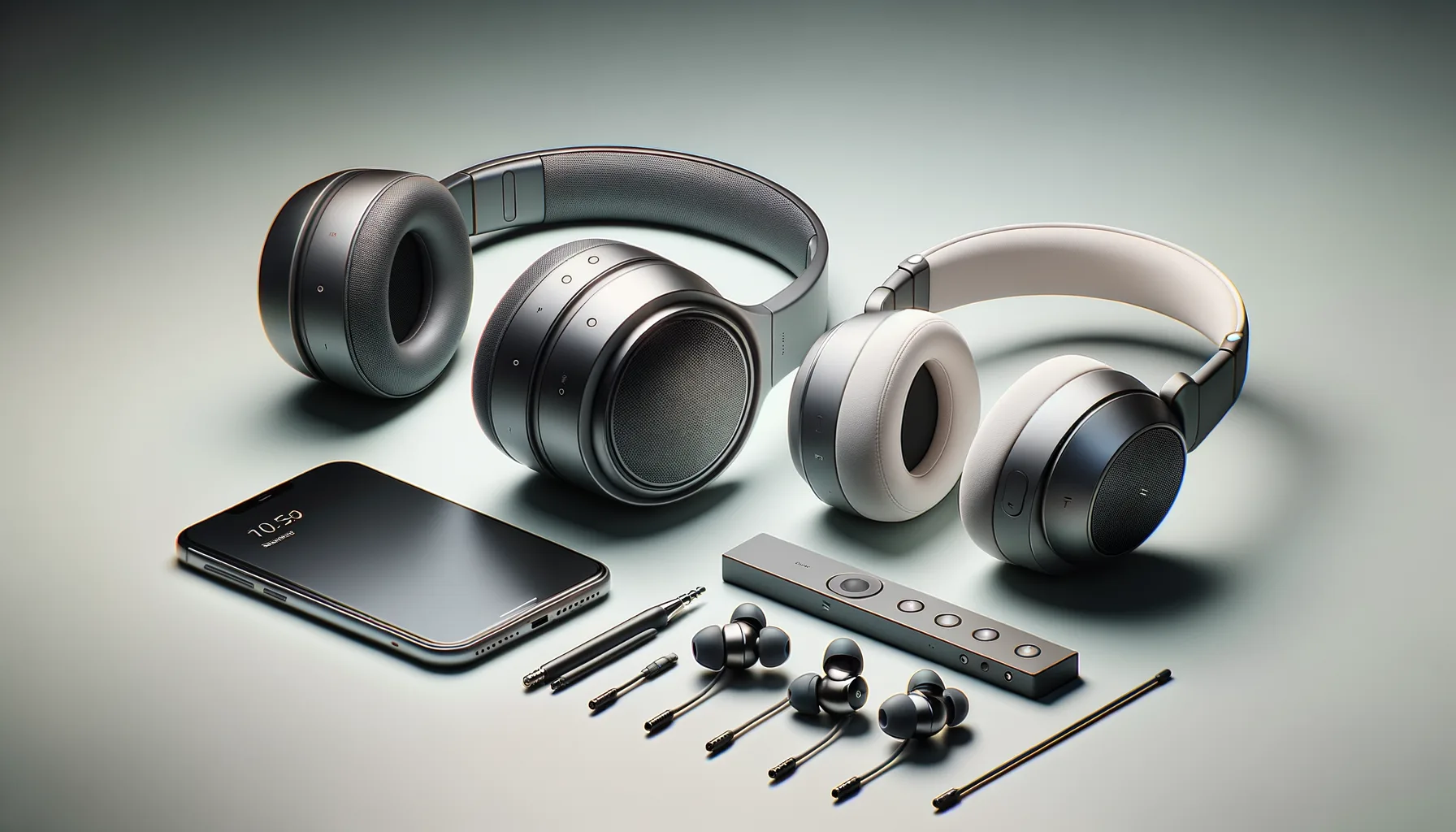
🎨 AI-generated illustration (EU AI Act 2026) — does not represent the actual appearance of the product. See the Amazon listing for official photos.
Get our best picks
Every week, our Amazon comparisons directly in your inbox.
No spam. Unsubscribe in 1 click.
📌 This article contains Amazon affiliate links. If you purchase through these links, we earn a small commission at no extra cost to you. Thank you for supporting WiseProductAdvisor!
Over-ear vs earbuds for music is one of the most practical headphone decisions you can make in 2026, because the “best” option depends less on hype and more on how you actually listen. If you want the most immersive sound, the most comfortable long-session wear, and the strongest noise isolation, over-ear headphones still lead in many categories. If you need portability, all-day convenience, and a lighter everyday carry, modern earbuds have become far more capable than they were even a few years ago.
This guide breaks down the real differences that matter when buying for music: sound quality, comfort, portability, battery life, fit, noise cancellation, and value. You will also see where each format wins depending on your listening habits, commuting routine, workout needs, and budget. To keep this practical, the comparisons focus on what buyers should expect from current 2026 models, not marketing claims. If you are deciding between one pair of headphones for home listening or a compact option for music on the move, this article will help you choose with confidence.
We will also connect the headphone decision to broader buying behavior: just as a smart purchase saves time and money in other categories, the right audio choice prevents regret later. That same logic appears in WiseProductAdvisor’s complete buying guide for Amazon’s top best sellers, the practical framing in robot vacuum versus traditional vacuum time-saving comparisons, and the deal-avoidance approach in Amazon buying tips designed to reduce returns.
1. Sound quality: where over-ear headphones still dominate
If music quality is your top priority, over-ear headphones remain the safer bet in 2026. The larger drivers, deeper ear cups, and better passive sealing usually create a wider soundstage, stronger bass extension, and a more natural presentation of vocals and instruments. That does not mean earbuds sound bad anymore; premium earbuds can sound excellent. But when you compare them side by side under controlled listening, over-ear models still tend to deliver the more convincing “full-size” music experience.
For genres that rely on layering and dynamics, such as jazz, orchestral, progressive rock, or detailed electronic tracks, over-ear headphones often give you more separation between elements. The result is easier listening at lower volumes, which can matter if you want to preserve hearing over time. Many 2026 over-ear models also include advanced tuning apps, spatial audio modes, and adaptive EQ that improve the experience further.
Earbuds have narrowed the gap significantly, especially in the premium segment. Better drivers, improved acoustic chambers, and stronger DSP tuning mean many listeners will be satisfied with high-end earbuds for everyday music. Still, earbuds are physically limited by their size. They rarely reproduce the same low-end weight or expansive staging that over-ear headphones can produce.
Best sound use cases
- Choose over-ear headphones if you want the richest sound for home listening, albums, and focused sessions.
- Choose earbuds if you want very good sound in a compact format and are willing to trade some depth for convenience.
- Choose over-ear if you often listen to lossless or high-resolution files and want to hear subtle detail.
Bottom line: for pure music performance, over-ear headphones still win more often than not.
2. Comfort, fit, and long listening sessions
Comfort is where the over-ear vs earbuds for music debate becomes personal. Some listeners cannot tolerate anything inside the ear canal for more than an hour. Others dislike the pressure and heat of full-size headphones. In 2026, both categories have improved, but they still feel fundamentally different.
Over-ear headphones distribute weight around the ear and across the headband, which usually makes them better for long sessions at a desk, on a couch, or in a studio. Good padding, lighter materials, and better clamping force have made top models easier to wear for several hours. However, over-ear headphones can still cause heat buildup, especially in warm climates or during long commuting days.
Earbuds are smaller and more discreet, but fit quality varies much more from person to person. A great pair can disappear in the ear; a poor fit can cause pain, slipping, or fatigue. Tip design matters, and so does the shape of your ear canal. Because of that, many buyers should think of earbuds as a fit-dependent purchase rather than a universal comfort win.
Comfort checklist before you buy
- Look for multiple ear tip sizes if choosing earbuds.
- Check weight and clamping force if choosing over-ear headphones.
- Consider memory foam ear pads for longer sessions.
- Read return policies carefully if you are unsure about fit.
If you plan to use headphones while moving around, some of the practical advice in how to choose headphones for running comfortably can help you avoid pressure points, unstable fit, and unnecessary discomfort. For active users, the comfort question is not just about softness; it is about whether the headphones stay in place without distracting you from the music.
Bottom line: over-ear headphones usually win for long, relaxed listening, while earbuds can be more comfortable for short, active, or on-the-go use if the fit is right.
3. Portability, battery life, and everyday convenience
In daily life, convenience often matters as much as sound. This is where earbuds have a major structural advantage. They are tiny, easy to pocket, and quick to put on. For commuters, travelers, office workers, and gym users, that convenience can outweigh the sonic benefits of over-ear headphones.
Earbuds also tend to be easier to carry with a phone, laptop, or small bag. Their charging cases make top-ups simple, and many 2026 models support fast charging that delivers several hours of playback in a short time. On the downside, the case is one more item to keep track of, and tiny earbuds are easier to lose.
Over-ear headphones have improved in portability, especially with folding hinges and travel cases, but they still take up more space. Battery life is often excellent, though, and many full-size models can run for 30 to 60 hours or more, depending on ANC usage. That means fewer charging interruptions and less battery anxiety for long trips.
| Category | Over-ear headphones | Earbuds |
|---|---|---|
| Portability | Bulkier, less pocket-friendly | Excellent, highly compact |
| Battery life | Often longer per charge | Good, but depends on case recharging |
| Setup speed | Fast, but less discreet | Very fast and convenient |
| Travel practicality | Best for bags and long flights | Best for pockets and light carry |
Bottom line: if convenience is the priority, earbuds are usually the better everyday choice. If you want fewer charging interruptions and do not mind carrying more, over-ear headphones are still excellent.
4. Noise cancellation, isolation, and listening environments
Noise cancellation has become a major buying factor, and both categories are strong in 2026. Still, over-ear headphones often have the edge because they combine active noise cancellation with stronger passive isolation. The larger ear cups physically block more external sound before digital processing even begins, which can make a noticeable difference on planes, trains, and noisy offices.
Earbuds can also offer impressive ANC, and for steady low-frequency sounds like engine hum or air conditioning, premium models may perform extremely well. But because they seal directly in the ear canal, the result depends heavily on tip fit. If the seal is imperfect, noise cancellation and bass response both suffer.
For music listening, isolation affects more than quietness. Better isolation means you can listen at lower volumes, preserve detail, and reduce fatigue. That is especially useful in public spaces where background noise can force you to crank the volume. In that sense, the best choice is not just about how loud the headphones get; it is about how effectively they let you hear music without strain.
When ANC matters most
- Air travel: over-ear usually feels more immersive and more comfortable for long flights.
- Public transit: either format can work, but earbuds are easier to carry.
- Open offices: over-ear headphones often provide the best all-around isolation.
- Walking outdoors: earbuds with transparency mode can be safer and more practical.
If your music routine overlaps with outdoor movement, it is worth reading running with music safety tips for every runner. Safety and awareness matter just as much as sound when you are listening outside, and earbuds often make it easier to stay aware of your surroundings.
Bottom line: over-ear headphones usually provide the strongest overall isolation, but high-end earbuds can be excellent if fit and portability matter more.
5. Which one is better value in 2026?
Value is not just about the lowest price. It is about how much performance, comfort, and durability you get for your money. In 2026, the market is wide enough that both categories include budget options, mid-range sweet spots, and premium flagships. The right value choice depends on what you are optimizing for.
At the budget level, earbuds often look more attractive because they are cheaper, easier to replace, and better suited to casual use. Many sub-premium models now sound respectable and include ANC, app support, and decent battery life. But budget earbuds can also suffer from inconsistent fit and weaker durability.
Over-ear headphones usually offer stronger value in the mid-range. You often get better sound, better comfort, and longer battery life for only a modest increase in price. If your main use is home listening, office work, or long sessions, that extra spending can be worthwhile because the headphones will likely serve you better for more years.
Premium buyers should think about use case first. If you want the best portable listening experience, premium earbuds can be worth the cost. If you care most about music quality and comfort, premium over-ear headphones usually justify their price more convincingly.
Simple buying rule
- Buy earbuds if portability and convenience are your top priorities.
- Buy over-ear headphones if music quality and comfort matter most.
- Buy neither at the wrong price if the fit, battery life, or noise isolation does not match your routine.
This is the same logic behind smart shopping in other categories: the best purchase is not the flashiest one, but the one that reduces friction and avoids regret. WiseProductAdvisor’s Amazon buying guide focused on fewer returns is a good example of how careful pre-purchase comparison saves time and money.
Bottom line: over-ear headphones usually deliver stronger value for serious music listeners, while earbuds win for convenience-driven buyers.
Questions fréquentes
Which is better for music, over-ear headphones or earbuds?
For most serious music listeners, over-ear headphones are better because they usually provide fuller sound, better bass, and a wider soundstage. They also tend to be more comfortable for long sessions. Earbuds can still sound excellent, especially at the premium level, but they are more limited by size. If your priority is pure listening quality at home or at a desk, over-ear is typically the stronger choice. If you value portability and quick everyday use, earbuds may be the better fit.
Are earbuds good enough for high-quality music in 2026?
Yes, premium earbuds are absolutely good enough for high-quality music in 2026. They can deliver clear vocals, strong detail, and effective noise cancellation. However, they still do not usually match the scale and depth of good over-ear headphones. The biggest factor is fit: if the seal is poor, sound quality drops quickly. For casual and mobile listening, modern earbuds are excellent. For more critical listening, over-ear models still have the advantage.
What are the most comfortable headphones for long listening sessions?
In most cases, over-ear headphones are the most comfortable for long listening sessions because they distribute pressure around the ear instead of inside the ear canal. That said, comfort depends on weight, clamp force, ear pad material, and head shape. Some people prefer lightweight earbuds for short periods because they feel less bulky. If you listen for hours at a time, especially at home or in an office, over-ear headphones are generally the safer comfort choice.
Do over-ear headphones have better bass than earbuds?
Usually yes. Over-ear headphones tend to produce stronger and more natural bass because they have more space for larger drivers and a better acoustic seal around the ear. Premium earbuds can still produce impressive bass, especially if the fit is secure, but they rarely match the physical impact and low-end extension of a good over-ear model. If bass quality is important for hip-hop, EDM, or cinematic music, over-ear headphones often deliver the more satisfying result.
Are earbuds or over-ear headphones better for travel?
It depends on the trip. Earbuds are better for light packing, quick access, and pocketable convenience. Over-ear headphones are better for long flights or train rides because they are often more comfortable and isolate noise more effectively. If you want the smallest possible carry and easy daily use, earbuds are the practical winner. If you want better immersion and less fatigue on long journeys, over-ear headphones are usually the better travel companion.
Conclusion
The over-ear vs earbuds for music decision in 2026 comes down to priorities, not trends. Over-ear headphones usually win on sound quality, comfort, noise isolation, and long-session listening. Earbuds win on portability, fast everyday use, and compact convenience. If you listen mostly at home or want the best possible music experience for the money, over-ear headphones are often the smarter buy. If you move constantly, travel often, or want something easy to carry, earbuds make more sense.
The best approach is to match the format to your routine rather than asking which one is universally better. That is the same practical mindset behind smarter buying across categories: define the use case first, then choose the product that fits it best. If you want to continue with a related practical guide, read how to choose headphones for running comfortably for a more activity-focused comparison that can help narrow your final decision.
📌 This article contains Amazon affiliate links. If you purchase through these links, we earn a small commission at no extra cost to you. Thank you for supporting WiseProductAdvisor!
🔗 Affiliate links : Some links on this page are Amazon affiliate links. As an Amazon Associate, we earn from qualifying purchases at no extra cost to you.
🏆 Top 5 — Best headphones
↻ Mis à jour le 15/04/2026 · Données 2025-2026